


Training offshore teams works best when it is structured, ongoing, and tailored to the realities of remote work. Strong training gives offshore teammates the context, skills, and confidence they need to deliver at the same standard as your in-house team. When training is weak or rushed, gaps in process, culture, and expectations show up quickly in quality and timelines. Establishing clear communication channels is essential to ensure smooth collaboration, cultural understanding, and alignment across different time zones.
Consistent feedback loops and performance check-ins further strengthen offshore training. When teams receive regular guidance, updated documentation, and clear examples of expected outputs, they adapt faster and maintain alignment with your internal standards. It is also important to regularly discuss progress in virtual meetings to keep everyone aligned and address issues early. This ongoing support ensures that training isn’t a one-time event but a continuous process that drives long-term success.
To hire offshore teams with vetted and top performers, Flexiple gives you instant access to elite global talent, ensuring your projects move faster, smoother, and with proven results.
Why Is Training Important for Offshore Teams?
Training is important for offshore teams because it provides clarity, builds competence, and fosters a sense of belonging within the organization. Offshore teams often work remotely and rely heavily on structured processes to stay aligned with internal teams. Without training, small misunderstandings can escalate into quality issues, miscommunication, or delays. Overcoming cultural barriers is also crucial for effective collaboration and communication. Effective training ensures offshore employees understand the company’s expectations, workflows, and standards, enabling them to deliver consistent outputs even when operating independently.
Training also plays a key role in enhancing confidence and engagement. Offshore teams perform best when they feel prepared, supported, and equipped with the right skills. By investing in training, organizations convey commitment to their offshore workforce, which improves motivation, retention, and emotional connection to the company. Leveraging offshore talent with diverse skill sets can drive innovation, adaptability, and efficiency in project execution. Proper training transforms offshore teams from outsourced contributors into deeply integrated partners.
- Clear training reduces ambiguity, helping offshore members understand responsibilities, processes, and expected outcomes.
- Structured learning improves consistency in work quality and reduces the risk of errors across global operations.
- Training builds confidence and motivates offshore teams by equipping them with the tools and skills needed for success.
- Strong onboarding and development programs create a sense of belonging and improve team loyalty.
- Continuous learning helps offshore teams adapt to evolving technologies, standards, and market conditions.
- Well-trained offshore teams communicate more clearly with onsite teams, reducing friction and delays.
- Training helps teams adapt to different cultural practices and enhances project outcomes.
Training is ultimately an investment in the long-term value of offshore teams. When teams are educated and empowered, they deliver higher-quality work and contribute significantly to global operational excellence. Effective training can also provide a competitive advantage in the global marketplace.
Pair structured training offshore teams with ongoing tips for managing offshore teams for better retention.
What Are the Best Ways to Train Offshore Teams Effectively?
The best ways to train offshore teams effectively combine structured programs, real project work, and continuous feedback. One-time workshops or slide decks are not enough. Offshore teammates need repeated exposure, practice, and support.
Use a Blended Learning Approach
You use a blended learning approach by mixing live sessions, self-paced modules, and on-the-job practice. Live sessions handle complex concepts and Q&A, while self-paced content lets people revisit material. Practice tasks ensure theory turns into real skills.
Assign Clear Training Ownership
You assign clear training ownership so the program does not drift. Someone in HR, L&D, or operations should own the curriculum and track completion. Functional leaders own the role-specific content and keep it updated as processes change.
Tie Training Goals to Business Outcomes
You tie training goals to business outcomes such as faster time to productivity, fewer defects, or smoother handovers. When you measure impact, you can refine the program and make a strong case for further investment.
Example Effective Training Tactics
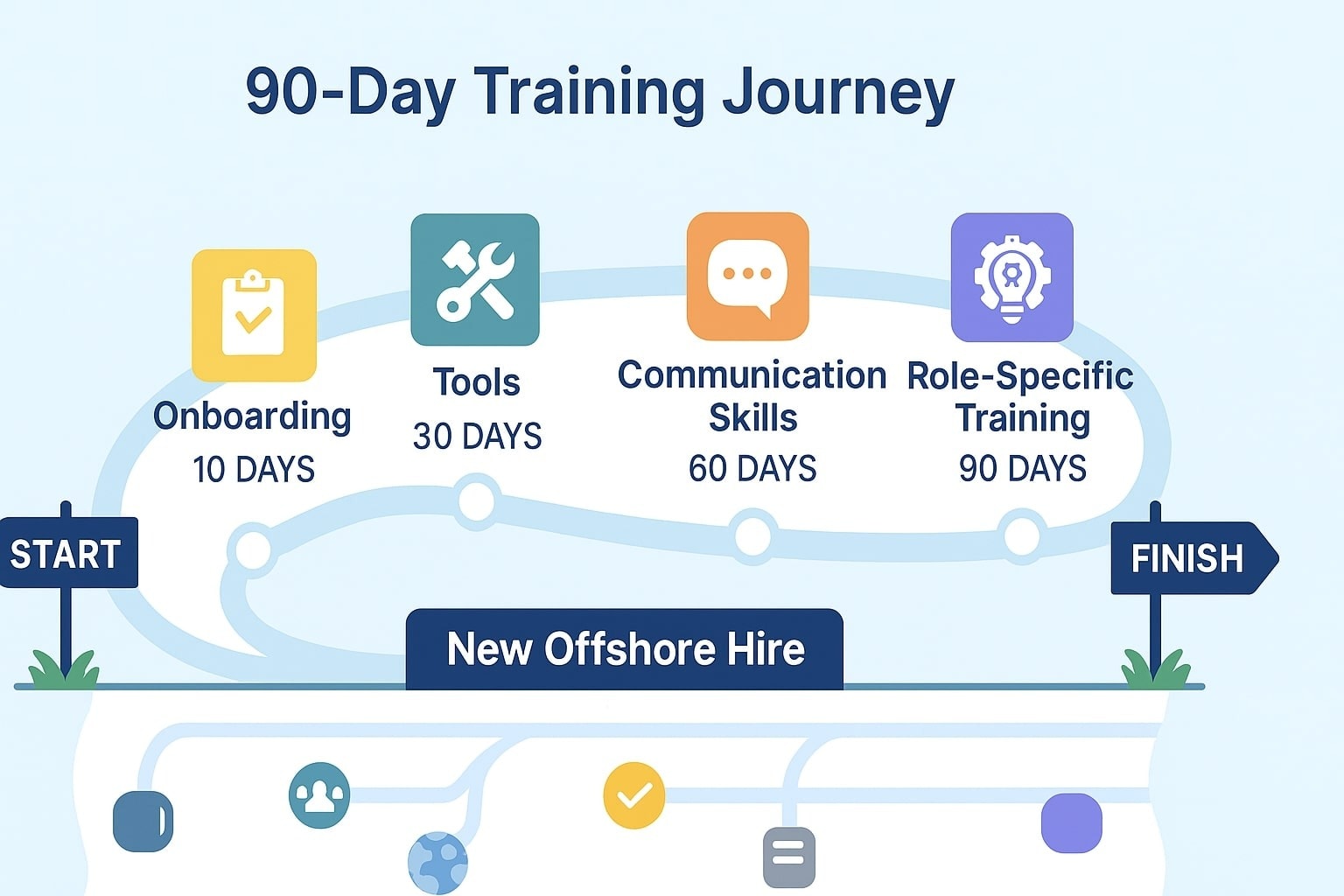
- Make every new offshore hire follow a standard 30-60-90 day learning plan
- Pair new team members with experienced “buddies” for daily guidance
-
Record key trainings so people in different time zones do not miss out
How to Build an Effective Onboarding Program for Offshore Teams?
You build an effective onboarding program for offshore teams by designing a repeatable path that combines company, role, and culture learning. Onboarding is not just paperwork; it is the first real experience of your operating style.
Structure Onboarding Around the First 90 Days
You structure onboarding around the first 90 days with clear weekly goals. Early weeks focus on company, products, and tools. Later weeks add more complex responsibilities and performance expectations.
Include Culture and Ways-of-Working Training
You include culture and ways-of-working training so offshore teams understand how decisions are made and how to escalate issues. Sessions on values, communication norms, and time zone etiquette are just as important as tool walkthroughs. Understanding and adapting to different cultural practices is essential for improving collaboration and communication within offshore teams. Training should also address various leadership styles to help offshore teams integrate smoothly with the company's management approach. Awareness of both local and company cultural practices can help bridge gaps and foster better teamwork.
Use Real Work as Learning Material
You use real work as learning material by assigning small, low-risk tasks during onboarding. New hires shadow experienced staff, then take over pieces of the process. This keeps learning grounded in reality and reveals gaps in the training content.
Make best practices for cultural alignment in offshore teams part of your training curriculum.
What Training Tools and Platforms Should You Use for Managing Offshore Teams?
You should use a set of training tools and platforms that make learning easy to access, track, and update across locations. In addition, leveraging communication tools is essential to facilitate effective collaboration among team members, while project management tools help streamline training processes and coordination across different locations. Tools help scale your efforts so training does not depend on a few busy experts repeating the same content.
Choose a Learning Management System (LMS)
You choose a Learning Management System to host courses, track progress, and assign learning paths. An LMS centralizes material so you avoid scattered slide decks and links. It also lets you see who has completed which modules.
Use Video Conferencing and Recording Tools
You use video conferencing and recording tools for live training sessions and Q&A. Recording key sessions means offshore teammates in other time zones can watch later. Short video clips can also serve as micro-learning modules for specific tasks.
Leverage Knowledge Bases and Documentation Platforms
You leverage knowledge bases and documentation platforms as the single source of truth for procedures and standards. Offshore teams can search for answers instead of waiting for someone to wake up in another region. Good documentation also lowers the burden on trainers.
Compare Training Tool Types and Their Roles
|
Tool Type |
Main Use |
Benefit for Offshore Teams |
|
Learning Management System |
Host courses, track completion |
Structured learning paths across regions |
|
Video and webinar tools |
Live sessions, recordings |
Supports different time zones and Q&A |
|
Knowledge base / wiki |
Process docs, how-tos, FAQs |
Self-service answers and fewer delays |
|
Quiz and assessment tools |
Check understanding, certify skills |
Confirms that key concepts really landed |
How to Improve Communication Skills Through Training?
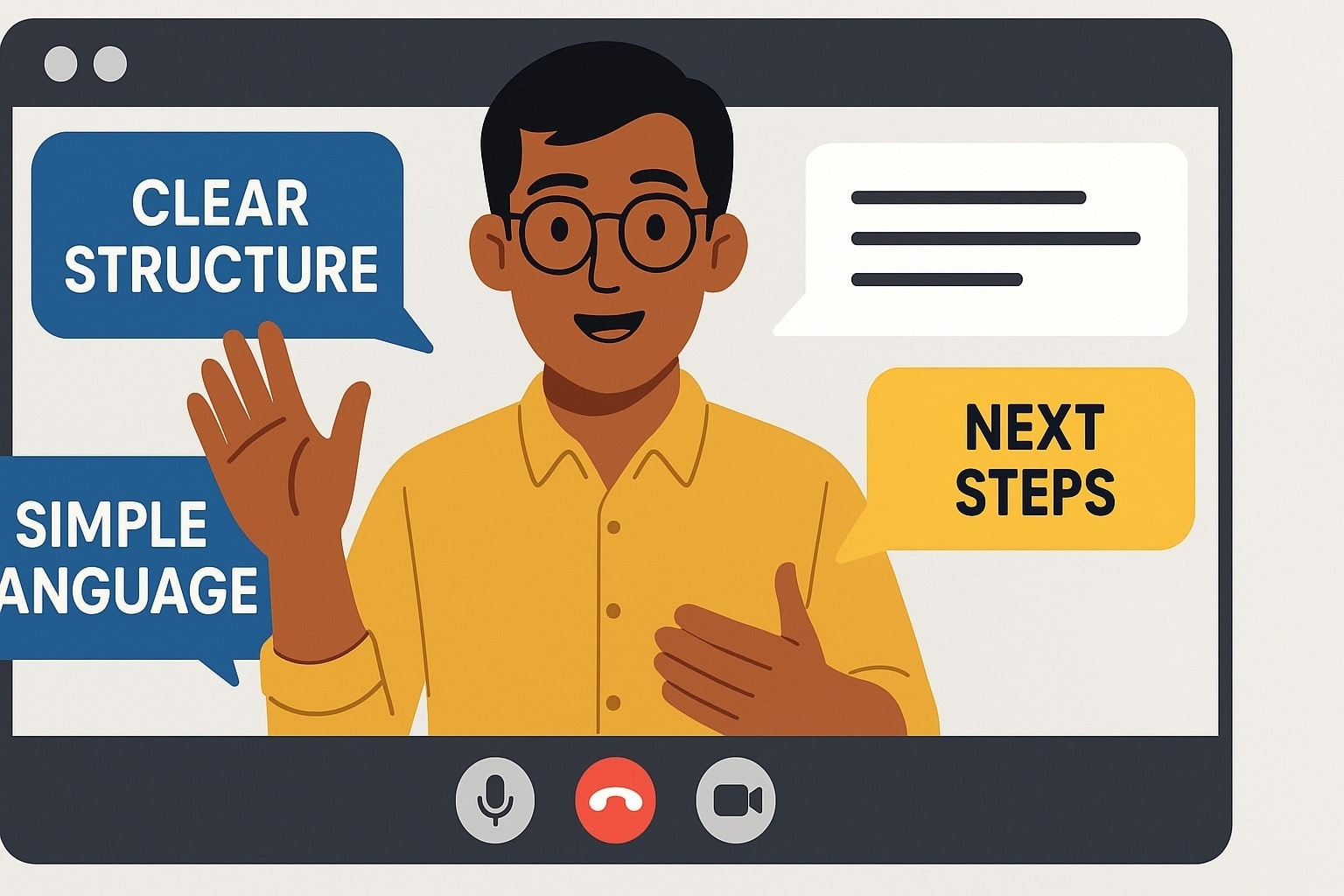
You improve communication skills through training by teaching simple, repeatable habits that fit daily work. Offshore teams do not need perfect language; they need clarity, structure, and confidence.
Train on Clear Written Communication
You train on clear written communication because most collaboration happens in chat, email, and ticket comments. Modules should cover subject lines, message structure, and how to ask specific questions. Before-and-after examples make the training concrete.
Practice Live Communication in Safe Settings
You practice live communication in safe settings such as role plays and small-group discussions. People can rehearse standups, status updates, and difficult conversations without pressure from clients. Feedback focuses on clarity and structure, not accent.
Teach How to Choose the Right Channel
You teach how to choose the right channel so people know when to write, call, or document. Clear rules about when to escalate to a call reduce misunderstandings and long back-and-forth threads.
Include agile rituals from best practices for running agile with offshore teams in training modules for dev teams.
How to Provide Role-Based and Technical Training to Offshore Teams?
You provide role-based and technical training to offshore teams by tailoring content to the skills each role needs for success. Generic training cannot cover the depth required for specialized work such as accounting, engineering, or customer support.
Define Competency Maps for Each Role
You define competency maps for each role that list the skills and behaviours required at different levels. These maps cover both technical and soft skills. They guide which courses, shadowing, and practice tasks each person should take.
Combine Theory With Hands-On Practice
You combine theory with hands-on practice so people can apply what they learn. Technical training should include labs, simulations, or sandbox environments where offshore teams can experiment without risk.
Use Experts as Trainers and Mentors
You use experts as trainers and mentors to share real-world knowledge. Senior onshore staff can run deep-dive sessions or design case studies. Offshore specialists who master a skill can then train others, creating a virtuous cycle.
What Methods Improve Long-Term Skill Development in Offshore Teams?
Methods that improve long-term skill development in offshore teams focus on continuous learning and clear career paths. One-off courses are useful, but growth sticks when people have regular opportunities to stretch.
Introduce Individual Development Plans
You introduce individual development plans for every offshore team member. Each plan lists growth goals, required skills, and planned activities such as courses, projects, or rotations. Managers review these plans in regular one-on-ones.
Create Learning Communities and Guilds
You create learning communities and guilds around key topics like data, quality, or automation. Members share resources, run internal talks, and support each other’s learning. These communities cut across locations and strengthen expertise.
Link Skill Growth to Career Progression
You link skill growth to career progression so people see clear rewards for learning. Promotion criteria and role levels should explicitly reference skills, certifications, or demonstrated behaviours. This encourages offshore teammates to own their development.
What Should You Avoid When Training Offshore Teams?
You should avoid training mistakes that ignore context, overload people, or treat offshore teams as an afterthought. These errors waste time and can damage trust.
Avoid One-Size-Fits-All Content
You avoid one-size-fits-all content that assumes every region, role, and seniority level has the same needs. Tailor case studies and examples to the actual work offshore teams do.
Avoid Information Dumping Without Practice
You avoid information dumping without practice, such as long slide decks with no exercises. People forget most of what they hear unless they apply it soon. Break content into smaller chunks with actions between sessions.
Avoid Ignoring Time Zones and Workload
You avoid ignoring time zones and workload when scheduling training. Repeated late-night sessions or training stacked on top of deadlines sends the message that training is a burden, not a support. Offer recordings and flexible timings where possible.
FAQs About Training Offshore Teams
1. How Early Should Training Start for New Offshore Hires?
Training should start before a new offshore hire’s first official day, with access to basic company and product material. Formal onboarding then runs through the first 60–90 days with increasing responsibility.
2. Who Should Own Training for Offshore Teams?
Training for offshore teams should be owned jointly by HR or L&D and the functional leaders. HR or L&D manages structure and tools, while functional leaders own content and outcomes.
3. How Do You Handle Language Differences in Training?
You handle language differences by using simple English, visual aids, and written summaries. Encourage questions and avoid idioms. Where needed, provide subtitles or transcripts for recorded sessions.
4. How Often Should Offshore Teams Receive Training?
Offshore teams should receive training continuously, with core refreshers at least once a year and smaller sessions throughout each quarter. New tools, processes, or products should always come with updated training.
5. How Do You Measure Whether Training Works?
You measure whether training works by tracking both completion metrics and business results. Look at time to productivity, error rates, rework, satisfaction scores, and retention. Feedback from managers and offshore teammates also shows where to improve the program.