


Managing offshore teams is highly effective when you combine clear communication, structured processes, and modern collaboration tools. Global teams deliver strong results when leaders intentionally design how people work together across time zones, cultures, and employment models.
Offshore collaboration is no longer an experiment; it is a core part of how high-performing companies operate. When you treat offshore teams as strategic partners instead of low-cost extensions, you unlock innovation, resilience, and round-the-clock productivity.
This guide walks through the key tips, communication habits, cultural practices, tools, and leadership approaches that make offshore teams productive and engaged. It also covers how to track performance, manage time zones, and handle common questions about global workforce management.
For long-term success, invest in training offshore teams that reinforce your processes
Why Managing Offshore Teams Requires a Strategic Approach?
Managing offshore teams requires a strategic approach because ad-hoc coordination quickly breaks down across distance, cultures, and time zones. Treating global collaboration as a deliberate system ensures clarity, accountability, and trust.
Offshore teams operate in different contexts, with their own work norms, public holidays, and communication styles. Without a strategic lens, leaders often under-communicate, duplicate work, or unintentionally create “second-class” teams who lack visibility and context.
A strategic approach means you intentionally define:
- Operating model – what work is done offshore, what stays onshore, and how responsibilities are split.
- Decision rights – who decides what, and how decisions are communicated.
- Communication rhythms – weekly, monthly, and quarterly cadences that keep everyone aligned.
This mindset shift transforms offshore teams from “support centers” into co-owners of outcomes. It also reduces reliance on a few heroic individuals who bridge gaps informally, and instead builds a repeatable, scalable collaboration model.
What Are the Key Tips for Managing Offshore Teams Effectively?
The key tips for managing offshore teams effectively focus on clarity, predictability, and respect for differences. When expectations are explicit and systems are stable, offshore teams can do their best work.
Some foundational tips include:
-
Define clear goals and outcomes
Set quarterly and monthly objectives, with measurable results for each team.
Write them down, make them visible, and ensure every offshore member understands how their work ties to business goals. -
Document everything important
Relying on oral communication fails when people are spread across time zones. Use written specs, decision logs, and checklists so work can move forward even when a stakeholder is offline. -
Standardize processes and workflows
Create templates for briefs, handoffs, code reviews, and QA.
Standardization reduces rework and makes onboarding new offshore members much faster. -
Invest in strong onboarding
Onboarding should cover company context, product overview, architecture, playbooks, and tools.
A structured first 30–60 days accelerates trust and reduces misalignment later. -
Respect time zones and working hours
Plan recurring meetings in overlapping windows and avoid last-minute changes. Show that you value offshore time by starting and ending meetings on time and sharing agendas in advance. -
Create direct channels with decision-makers
Offshore team members should have direct access to product managers, architects, or business owners.
Removing unnecessary intermediaries speeds up decisions and deepens ownership.
Don’t overlook best practices for cultural alignment in offshore teams – small adjustments can prevent big misunderstandings.
Communication Best Practices for Offshore Teams
Communication best practices for offshore teams revolve around clarity, consistency, and choosing the right channel for each type of message. When communication is intentional, misunderstandings drop and productivity rises.
Start by defining which tools are used for what purpose. For example, use chat for quick questions, project management tools for tasks, and email for official decisions or summaries. This shared agreement prevents important information from getting buried in random channels.
Consider these best practices:
Define Clear Communication Channels and Their Purpose
Establishing which tools are used for which types of messages eliminates confusion and prevents important updates from getting lost.
- Chat tools (Slack, Teams) should be used for quick questions or clarifications.
- Project management tools (Jira, ClickUp, Asana) should handle tasks, deadlines, and ticket updates.
- Email should be used for official decisions, summaries, and long-form communication.
Over-Communicate Context, Not Micro-Details
Offshore teams perform best when they understand why something is being done—not just what to do.
- Provide background, goals, and constraints so teammates can make informed decisions.
- Once they have full context, they require fewer follow-up questions and can plan ahead.
- This reduces micromanagement and creates a stronger sense of ownership.
- If you’re new to remote collaboration, our guide on how to work with offshore teams walks through essential first steps.
Use Written Agendas and Written Recaps
Written documentation keeps teams aligned across time zones.
- Share meeting agendas in advance so offshore teammates can prepare or provide input asynchronously.
- After each meeting, post a short written recap with decisions, next steps, and owners.
- This creates a searchable knowledge base and ensures people who couldn’t attend remain in sync.
Prefer Asynchronous Communication When Possible
Asynchronous workflows reduce reliance on live meetings and allow for deeper focus.
- Use short explainer videos, annotated screenshots, and detailed briefs to convey instructions.
- Provide updates and feedback in threads so teammates can respond when they are online.
- This approach minimizes time zone friction and prevents work from stalling.
Adopt Closed-Loop Communication
Closed-loop communication ensures everyone has the same understanding of tasks or decisions.
- Encourage team members to rephrase what they understood: “So to confirm, the next step is…”
- This validates alignment and exposes misunderstandings early.
- It protects timelines and strengthens accountability.
Set Language and Tone Expectations
Clear language reduces ambiguity, especially in multicultural teams.
- Use simple, direct English and avoid slang, idioms, or culturally specific references.
- Encourage questions and create space for teammates to ask for clarification without hesitation.
- Psychological safety leads to better collaboration and fewer errors.
How Can You Build Trust and Collaboration Across Offshore Teams?
You can build trust and collaboration across offshore teams by combining reliable delivery with genuine human connection. Trust grows when people repeatedly see that others do what they say, share credit fairly, and communicate transparently.
Begin by making roles, responsibilities, and ownership explicit. When everyone knows who owns which decisions, there are fewer conflicts and less finger-pointing. This clarity gives offshore teammates the confidence to step up and lead.
To deepen trust and collaboration:
-
Create shared rituals
Run recurring ceremonies such as weekly demos, retrospectives, or learning sessions.
Use these to celebrate wins, review setbacks, and share knowledge across locations. -
Encourage cross-location pairing
Pair engineers, analysts, or designers from different regions on specific tasks or spikes.
This breaks down “us vs. them” walls and creates personal relationships. -
Share recognition publicly and fairly
Call out contributions from offshore members in company-wide channels or all-hands meetings. Public recognition signals that offshore talent is valued, not invisible. -
Be transparent about constraints and trade-offs
When timelines slip or priorities change, explain the reasoning instead of just issuing orders. Transparency breeds empathy and alignment instead of frustration. -
Invest in occasional in-person meetups when possible
Even rare face-to-face meetings can dramatically strengthen trust for years.
Use these gatherings for workshops, planning, and informal bonding rather than routine status updates.
Learn more about our overall approach on offshore teams.
Tools and Technologies for Managing Offshore Teams
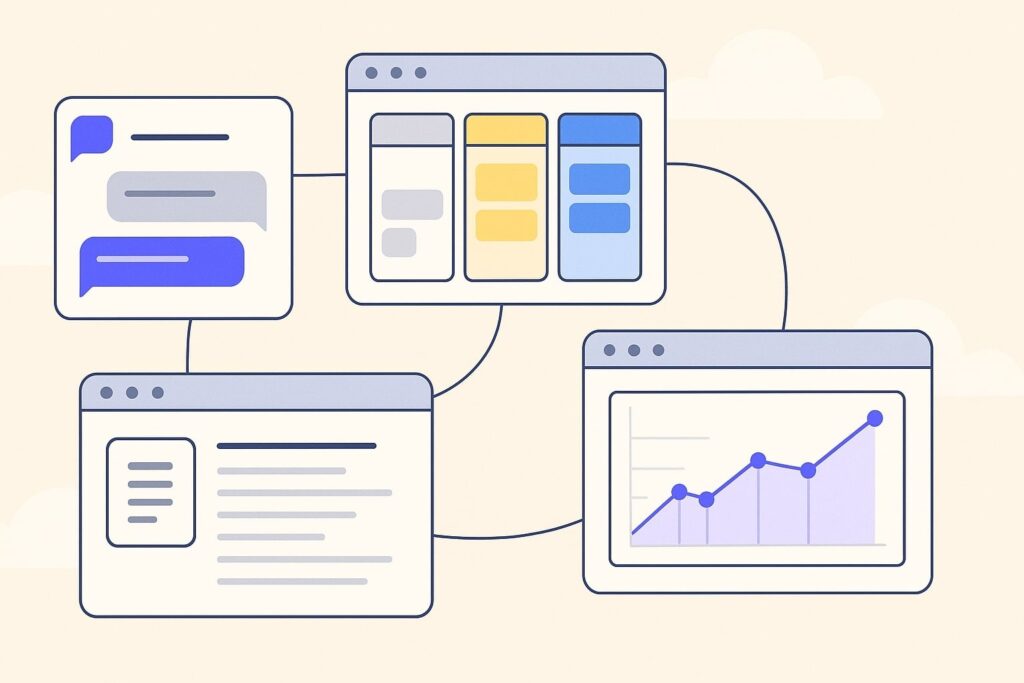
Tools and technologies for managing offshore teams provide the digital infrastructure that supports planning, communication, and delivery. The right stack reduces friction and keeps everyone aligned across locations.
At a minimum, offshore collaboration needs robust tools across these categories:
- Communication and meetings – video conferencing, chat, and voice tools for real-time interaction.
- Project and work management – boards, tasks, roadmaps, and OKR tools to track progress.
- Knowledge management – wikis, document hubs, and internal search to store institutional knowledge.
- Code and artifact management – repositories, CI/CD pipelines, and design systems to standardize work.
You can also use monitoring and analytics tools to track system health, deployment frequency, or support metrics. When dashboards are accessible to both onshore and offshore teams, everyone can see the impact of their work in real time.
Here is a simple comparison framework you can adapt when choosing tools:
| Category | Core Purpose | Key Offshore Requirement |
| Video + Chat | Real-time collaboration | Stable calls, recording options, thread organization |
| Project Management | Task and roadmap tracking | Time zone-friendly notifications, clear ownership fields |
| Documentation & Wikis | Single source of truth | Strong search, permissions, and version history |
| Code / Design Repositories | Shared technical assets | Branching workflows, reviews, and access control |
| Monitoring & Analytics | Visibility into performance and issues | Shared dashboards and alerting across locations |
Choose fewer, well-integrated tools rather than a large, fragmented stack. Standardizing on a small set of platforms helps new offshore members become productive quickly and avoids confusion about where to find information.
Cultural Alignment and Time Zone Management Tips
Cultural alignment and time zone management are essential when working with globally distributed teams. Misunderstandings, delays, and fatigue often emerge when cultural norms and working hours are overlooked. Respecting culture and time shows respect for people and directly improves trust, collaboration, and productivity.
Start by learning the basics of each team’s cultural context—holidays, communication styles, attitudes toward hierarchy, and decision-making preferences. Even simple gestures, like recognizing regional festivals or pronouncing names correctly, strengthen rapport and belonging.
Here are key strategies to enhance cultural alignment and manage time zones effectively.
Create a Shared “Ways of Working” Guide
Documenting how the team works ensures everyone understands expectations across cultures and regions.
A “ways of working” guide can cover meeting etiquette, communication norms, feedback style, response-time expectations, and escalation paths. Keeping this document concise yet clear helps new team members integrate faster and prevents cross-cultural friction. Review it annually to keep it relevant and aligned with evolving team needs.
Rotate Meeting Times When Necessary
When global all-hands or large cross-functional meetings are unavoidable, rotating time zones ensures fairness. This prevents the same region from consistently attending late-night or early-morning calls. Even when some members cannot join, share meeting recordings, summaries, and action items so no one feels left out or disadvantaged because of geography.
Use Overlap Hours Wisely
Shared overlap hours are often limited, so they should be reserved for the most meaningful activities. Use this time for high-value discussions such as design reviews, roadmapping, decision-making, or sensitive topics. Don’t waste overlap slots on status updates or routine check-ins—those can be handled asynchronously through documentation or recorded updates.
Be Explicit About Local Flexibility
Empower managers to offer flexible working hours when required, especially if team members need to join occasional early or late calls. Encourage everyone to block “no-meeting focus” time on calendars to maintain healthy work rhythms. Flexibility helps reduce burnout and shows that the company values well-being, not just availability.
Encourage Curiosity and Empathy
Create opportunities for team members to learn about each other’s cultures in an organic, non-forced way. Host informal sessions like “country spotlights,” virtual coffee chats, or cultural-learning moments during team meetings. The goal isn’t to erase differences but to appreciate them and evolve together as a multicultural team. Curiosity builds understanding, and understanding strengthens collaboration.
Performance Tracking and Productivity Guidelines
Performance tracking and productivity guidelines provide offshore teams with clarity on what good performance looks like. When expectations and metrics are transparent, teams can self-correct and continuously improve.
Begin by anchoring performance on outcomes, not just activity. For example, measure features shipped, defect rates, customer satisfaction, or revenue impact instead of counting hours online. This outcome focus is especially important in distributed environments.
Useful guidelines include:
-
Align individual goals with team and business goals
Each offshore member should have 3–5 clear objectives for the quarter that ladder up to team outcomes.
Review these regularly in one-on-ones and performance check-ins. -
Use a balanced scorecard of metrics
Combine delivery metrics (velocity, throughput), quality metrics (defects, incidents), and collaboration metrics (peer feedback).
This avoids over-optimizing for speed at the cost of quality or teamwork. -
Create transparent dashboards
Visualize key metrics in tools that everyone can access.
When offshore teams see live data, they can adjust priorities without waiting for a manager to tell them. -
Hold regular retrospectives
Retrospectives after sprints, releases, or projects help teams reflect on what worked and what did not.
Capture action items, assign owners, and track whether changes improved performance. -
Avoid micromanagement disguised as tracking
Resist the temptation to rely on intrusive monitoring tools that track keystrokes or screen time.
Such tools erode trust and push people towards performative activity instead of meaningful outcomes.
Clear performance expectations combined with psychological safety create an environment where offshore teams own their results and continuously look for better ways of working.
Leadership Techniques for Managing Offshore Talent
Leadership techniques for managing offshore talent emphasize empowerment, clarity, and trust over command-and-control. Effective leaders treat offshore professionals as peers and co-creators, not as anonymous resources.
One core technique is leading with context rather than control. Share business goals, customer stories, and product vision, then let offshore teams suggest implementation options. This approach not only surfaces better ideas but also increases engagement.
Additional leadership techniques include:
-
Run structured one-on-ones across locations
Hold regular one-on-ones focused on growth, obstacles, and career aspirations, not just status updates.
Ask about what is working, what feels frustrating, and how you can unblock the team. -
Create visible career paths for offshore roles
Define levels, competencies, and promotion criteria that apply consistently across geographies.
Offshore team members should have access to leadership roles, architecture positions, or program management tracks. -
Delegate authority, not just tasks
Give offshore leads ownership over modules, projects, or domains, including planning and stakeholder communication.
When people own decisions, they invest more deeply in quality and timelines. -
Model inclusive behavior in meetings
Actively invite input from offshore participants, especially when they join remotely while others are in a room.
Pause to ask for their views, and avoid side conversations that exclude them. -
Provide regular, high-quality feedback
Give specific, actionable feedback tied to behaviors and outcomes.
Balance constructive criticism with recognition, and avoid vague comments that can be misinterpreted across cultures.
Great offshore leadership blends clarity and empathy. Leaders who are predictable, fair, and transparent create global teams that feel safe to experiment, take ownership, and learn.
FAQs About Managing Offshore Teams
FAQs about managing offshore teams help address the common concerns leaders have when scaling global collaboration. Clear answers speed up decision-making and reduce hesitation.
1. How do I decide which work to send offshore?
Start with work that is well-defined, repeatable, and documented, such as maintenance, QA, or specific feature areas.
Over time, as trust grows, move more complex and strategic work offshore.
2. How many time zones are too many for one team?
In practice, 2–3 major time zones are manageable if there is at least a 2–3 hour overlap between each pair.
Beyond that, consider splitting into sub-teams with their own leads and coordination rhythms.
3. Should offshore teams report to local managers or central leaders?
A hybrid model works best: local managers handle day-to-day support and development, while central leaders align on strategy and standards.
Regardless of structure, avoid creating silos by investing in cross-location forums and communities of practice.
4. How do I keep offshore teams motivated?
Offer meaningful work, clear growth paths, and recognition that is visible across the company.
Involve offshore colleagues in roadmap discussions, design reviews, and innovation initiatives, not just execution.
5. What if language skills are uneven across the team?
Encourage simple, clear language and provide written summaries of important topics.
You can also offer language support or training when needed, especially for roles with heavy stakeholder interaction.
6. How long does it take to make an offshore model successful?
With focused effort, most organizations start seeing stable, predictable collaboration within 6–12 months.
The timeline shortens significantly when leadership commits to documentation, clear processes, and genuine cultural integration.
By planning thoughtfully, investing in people, and treating offshore teams as integral to the business, you build a resilient global organization ready for the demands of 2026 and beyond.