


You work with offshore teams by combining clear expectations, structured communication, cultural sensitivity, and strong leadership practices. When you treat global colleagues as true partners, offshore collaboration becomes a powerful engine for productivity, innovation, and resilience.
Offshore work is now a standard part of how companies deliver products, support customers, and run back-office operations. Offshore software development has become a strategic approach, with dedicated teams in different countries offering scalability and cost advantages. The outsourcing market has seen rapid growth, especially since the Covid-19 pandemic, as companies seek agility and reduced development costs. Distributed teams span time zones, employment models, and cultures. This creates huge advantages, but only when you design how people collaborate instead of hoping it works on its own.
Once you start, keep improving with practical tips for managing offshore teams.
Why Working With Offshore Teams Matters?
Working with offshore teams matters because it expands your access to talent, increases coverage hours, and strengthens business continuity. When you tap into global talent pools, you are no longer limited by local hiring constraints.
Offshore collaboration also helps you serve customers in different regions with better responsiveness. Teams in Asia, Europe, and the Americas can share responsibility for customer support, operations, or development, creating almost continuous coverage. However, some of the biggest challenges include maintaining clear communication, coordinating across vastly different time zones, and building trust. Addressing these challenges with practical solutions is essential to work effectively with offshore teams.
A few practical advantages stand out:
- Access to specialized skills: Offshore locations often build deep expertise in specific domains like customer support, software development, data analytics, or finance operations. This expertise lets you scale specialized work faster than building everything in-house.
- Cost flexibility without compromising quality: Wage structures differ across regions, which allows you to structure teams in a way that balances cost and capability. With thoughtful management, this flexibility supports investments in better tools, training, and benefits.
- Resilience and business continuity: Having core functions across locations reduces risk from local disruptions, such as weather events or connectivity outages.If one site faces an issue, another site can temporarily absorb urgent work.
- Balancing onshore and offshore teams: Strategically balancing onshore and offshore teams supports local employment, operational efficiency, and ensures the right mix of skills and coverage for your business needs.
Sharing the bigger picture and a clear product vision with offshore teams is crucial. When offshore members understand how their work fits into the overall goals, it aligns their efforts, improves decision-making, and fosters greater engagement.
Offshore teams are no longer just “support centers.” They are integral nodes in global organizations, co-owning outcomes and contributing ideas that shape strategy. Avoid maintaining an arm's length relationship; instead, integrate offshore members as valued team members to foster collaboration and productivity.
If you’re evaluating locations, read our regional insights in working with offshore teams in india.
What Are the Best Ways to Work With Offshore Teams?
The best ways to work with offshore teams focus on intentional planning, consistent routines, and mutual respect. Good intentions alone are not enough; you need concrete practices.
Start by defining why offshore collaboration exists in your organization. Are you aiming to increase coverage, scale delivery, or add specialized expertise? Once the purpose is clear, you can design roles, processes, and tools around that purpose. A dedicated project manager is essential for coordinating offshore teams, ensuring effective communication, and maintaining project success.
Some high-impact ways of working include:
- Clarify responsibilities and decision rights: Use simple responsibility matrices to show who is accountable, who executes, and who approves. Example: For a product feature, the onshore product manager might own scope, and the offshore engineering lead might own implementation decisions.
- Create predictable rhythms: Plan weekly check-ins, sprint ceremonies, and monthly reviews that include offshore colleagues. Predictable rhythms reduce confusion and give everyone a reliable forum to raise issues.
- Document agreements and processes: Put key decisions, workflows, and standards in shared documents rather than scattered messages. This habit lets offshore team members work confidently even when decision-makers are offline.
- Treat offshore and onshore teams as one unit: Share the same goals, dashboards, and recognition programs across locations. Avoid creating a “core” team and a separate “support” team; that divide quickly erodes engagement.
When these foundations are in place, offshore teams feel trusted, informed, and empowered to deliver.
How to Work Toward Clear Communication With Offshore Teams?
You work toward clear communication with offshore teams by choosing the right channels, over-communicating context, and adopting shared norms. Misunderstandings often come from assumptions, not from language skills.
Start by agreeing which tools serve which purpose: chat for quick questions, video calls for complex discussions, email for formal updates, and project tools for task tracking. When everyone uses tools in the same way, information becomes easier to find. It's also important to avoid cultural references, such as idioms or metaphors, to ensure clarity and prevent miscommunication across different cultures.
Key practices include:
- Lead with the main point: In messages and meetings, state the conclusion or request first, then share background. Example: “We are changing the deployment window to 09:00 UTC from next Monday because…” helps offshore colleagues act quickly.
- Use simple, direct language: Avoid idioms, local jokes, and overly complex phrasing. Plain language keeps everyone included, especially when people work in a second or third language.
- Write agendas and recaps: Share meeting agendas in advance and send short summaries afterward with decisions and action items. This supports those who could not attend live and gives everyone a reference point.
- Encourage clarification questions: Explicitly invite questions and model that asking for clarity is a strength, not a weakness. Over time, this builds psychological safety and reduces silent confusion.
By treating communication as a shared skill to improve, you gradually build a team culture where people understand one another faster and with less friction.
For software projects, adopt the patterns in best practices for running agile with offshore teams.
How to Work on Building Trust and Collaboration With Offshore Teams?
You work on building trust and collaboration with offshore teams by matching consistent delivery with genuine human connection. Trust is built through repeated experiences, not one-time gestures.
The first step is reliability. When onshore stakeholders consistently share information on time and follow through on commitments, offshore teams learn that they can depend on them. The reverse is equally important: offshore teams need the autonomy and resources to deliver reliably. Sharing project plans, sprint schedules, and future prospects with offshore members can also improve job security and foster trust.
Consider these trust-building actions:
- Share context, not just tasks: Explain why a project matters to customers or the business. Example: Instead of saying “Close these tickets,” share that “Reducing response time by 20% will improve our renewal rate.”
- Recognize contributions publicly: Celebrate wins in company channels, all-hands, or newsletters, and mention offshore colleagues by name. This visibility shows that their work is valued at the same level as onshore work.
- Encourage cross-location pairing: Pair engineers, analysts, or designers from different locations on specific deliverables. Through these partnerships, people build relationships that transcend organizational charts.
- Create safe spaces for feedback: Run retrospectives where people from all locations can share what is working and what feels difficult. Focus on problems, not personalities, so feedback feels constructive.
Check out why Flexiple is the best website to hire offshore teams. Over time, these habits create a sense of “one team,” where location matters less than the shared mission.
How to Work With the Right Tools for Offshore Teams?
You work with the right tools for offshore teams by building a streamlined, integrated stack that supports communication, planning, and execution. The goal is not to use every new platform, but to make sure each tool solves a clear problem.
At minimum, offshore collaboration needs:
- A reliable video and chat platform.
- A shared project or task management system.
- A central place for documentation and knowledge.
- Version control or repository tools for technical work.
- Communication tools for real-time and asynchronous interactions.
- Project management tools for tracking, visualization, and accountability.
- Video conferencing to enhance team communication and build relationships.
- Time tracking systems to ensure visibility, accountability, and accurate project evaluation.
- Clear documentation to reduce confusion, streamline workflows, and enhance collaboration.
- Processes to maintain code quality throughout the development process, including automation, testing, and deployment.
When choosing tools, involve representatives from offshore teams in the evaluation. They understand the realities of bandwidth, device constraints, and daily workflows.
A simple way to think about the stack is:
|
Tool Category |
Main Purpose |
Offshore Collaboration Need |
|
Communication |
Real-time and async conversations |
Stable calls, searchable history, timezone-friendly alerts |
|
Work Management |
Tasks, deadlines, and ownership |
Clear assignees, priorities, and dependency tracking |
|
Knowledge Management |
Single source of truth for processes |
Easy search, version control, and access control |
|
Delivery / Code Tools |
Building and reviewing work artifacts |
Shared repos, review workflows, and deployment visibility |
Avoid spreading information across too many tools. Standardize where possible and create short guides explaining how and when to use each platform, so new team members get productive quickly.
Tips for Working Across Time Zones With Offshore Teams
Tips for working across time zones with offshore teams center on respecting local hours, maximizing overlap, and designing smart handoffs. When you handle time zones thoughtfully, you reduce frustration and create smoother workflows. Managing vastly different time zones requires optimizing work schedules to maximize collaboration and ensure effective teamwork.
- Map out time zone overlapsCreate a simple chart showing working hours for each location and the 2–3 hour windows where teams overlap. Schedule recurring meetings within those windows whenever possible.
- Use asynchronous methods by defaultShare documents, recordings, and detailed briefs so that work can progress without waiting for a meeting. Example: Record a 5-minute video walkthrough of a new requirement rather than scheduling a late-night call.
- Rotate inconvenient meeting timesWhen a global meeting must happen outside normal hours, rotate the burden so the same region is not always sacrificing personal time. This fairness builds goodwill and reduces resentment.
- Design clear handover routinesFor work that passes from one time zone to another, add handover notes with status, next steps, and blockers. A simple template—“Done today, pending, risks”—prevents important details from being missed.
- Protect focus timeEncourage team members to block deep-work hours on their calendars and mute non-urgent notifications during those windows. Respect for focus time leads to better quality work.
How to Work on Performance Management for Offshore Teams?

You work on performance management for offshore teams by setting shared goals, measuring the right metrics, and providing regular feedback. Performance systems must feel fair and transparent across locations.
Begin with clear objectives that link individual work to team and business outcomes. For example, a support team might focus on resolution time, customer satisfaction scores, and quality audits, while an engineering team emphasizes deployment frequency, reliability, and defect rates.
Important guidelines include:
- Align metrics across locations: Use the same core metrics for comparable roles, regardless of country. This avoids the perception that some teams are held to easier or harder standards.
- Provide real-time visibility: Use dashboards or regular reports so offshore teams can see their performance without waiting for quarterly reviews. When people can watch progress, they adjust behavior faster.
- Combine quantitative and qualitative feedback: Numbers alone do not tell the full story. Add peer feedback, customer comments, or stakeholder input. This richer view highlights strengths such as collaboration or initiative that pure metrics might miss.
- Run structured one-on-ones: Meet regularly with offshore team members to discuss progress, obstacles, and development goals. Use a simple agenda: wins, challenges, goals for the next period, and support needed.
- Recognize improvements, not just top performers: Celebrate visible progress, such as a steady rise in quality scores or improved communication habits. This encourages a growth mindset and keeps motivation high.
When performance management is transparent and supportive, offshore teams feel treated as professionals, not just “resources,” and they respond with higher engagement.
Best Leadership Approaches for Working With Offshore Teams
The best leadership approaches for working with offshore teams emphasize empathy, clarity, and empowerment. Leaders set the tone for how offshore colleagues are treated and how much they can contribute.
Effective leaders:
- Lead with context and purpose: They repeatedly explain why work matters, not just what needs to be done. Example: A leader might share customer stories or business milestones so offshore teams see the impact of their efforts.
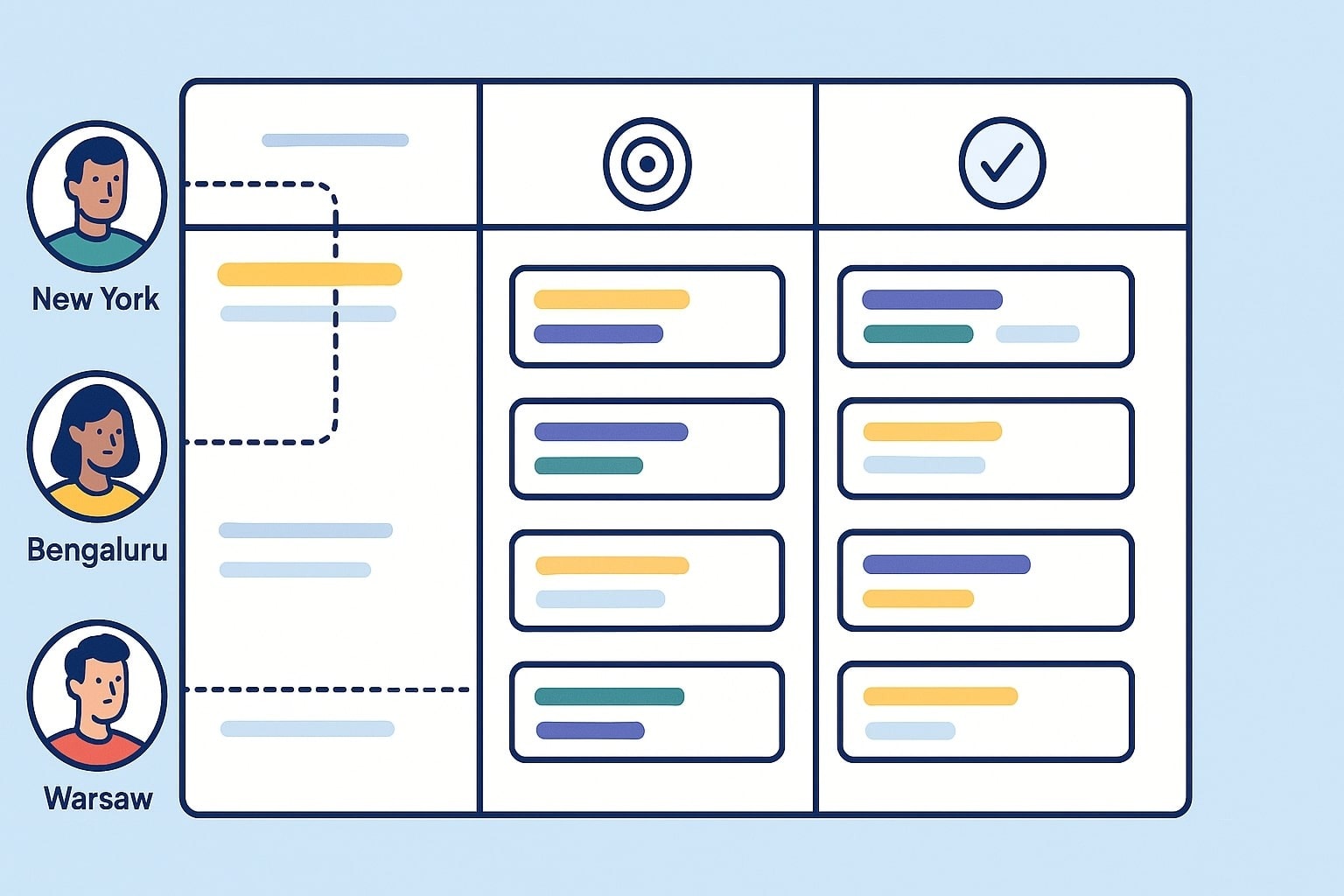
- Model inclusive behavior: They ensure offshore voices are heard in meetings, invite opinions, and avoid side conversations that exclude remote participants. Simple practices like pausing to ask, “What do our colleagues in Warsaw think?” signal respect.
- Delegate ownership, not just tasks: They trust offshore leads with planning, prioritization, and stakeholder communication for their domains.This creates local problem-solvers instead of teams that wait for instructions.
- Invest in growth and careers: They support training, mentorship, and progression paths that are accessible across locations. Offshore colleagues should see a future that includes senior, specialist, or management roles.
- Stay consistent and predictable: They avoid sudden changes in expectations and provide clear reasoning when priorities shift.Predictability builds confidence, even during periods of change.
Leadership style is one of the strongest predictors of whether offshore collaboration thrives or struggles. When leaders are fair, transparent, and respectful, teams repay that trust with commitment and creativity.
FAQs About Working With Offshore Teams
1. How do I decide whether offshore work is right for my organization?Offshore work fits best when you have repeatable processes, clear outputs, and the ability to document workflows. If you can describe what success looks like and measure it, offshore teams can deliver it.
2. How quickly can offshore teams become productive?With strong onboarding and clear processes, new offshore team members usually become productive within 6–12 weeks. Complex domains may take longer, but a structured plan shortens the ramp-up. Effective onboarding should include knowledge sharing to help offshore members overcome time zone barriers and ensure the offshore team understands project priorities and expectations.
3. Will communication barriers always be a problem?Communication barriers reduce significantly when you standardize tools, use simple language, and encourage questions. Over time, shared routines and relationships make collaboration feel natural.
4. How do I handle cultural differences in feedback styles?Explain your feedback norms openly and invite offshore colleagues to share theirs. Agree on simple, direct phrases for constructive feedback and always tie comments to specific behaviors, not personal traits.
5. Is it better to work with an offshore partner or build a captive center?Partners offer speed and flexibility, while captive centers provide deeper integration and control. The right choice depends on your scale, budget, and need for long-term institutional knowledge.
6. How do I keep offshore teams aligned with company culture?Share company values explicitly, invite offshore staff to town halls, and include them in recognition programs and cross-team initiatives. Culture spreads through shared stories, rituals, and decisions, not just written values.