


The best tips for working with offshore teams in India focus on clear communication, shared goals, and data-driven performance management. When you combine these with the right tools and strong cultural understanding, your Indian offshore team becomes an extension of your in-house workforce—not a separate vendor. It’s essential to select a reliable offshore partner who aligns with your business vision and ensures seamless integration with your existing teams.
Working with teams in India is now a standard choice for SaaS companies, agencies, and global enterprises. Choosing the right offshore company or offshore development company is crucial for long-term success. The country offers deep technical talent, strong English communication, and mature delivery practices. While your Indian offshore team becomes an extension of your in-house workforce, it’s important to compare this approach to traditional onshore team and in house team models, which may offer more direct oversight but often come with higher costs and less flexibility. To get the best results, you need a practical playbook that covers setup, day-to-day collaboration, culture, and performance tracking.
For a comparative view on talent pools, check benefits of hiring offshore teams in the philippines.
Why Should Businesses Consider Working With Offshore Teams in India?
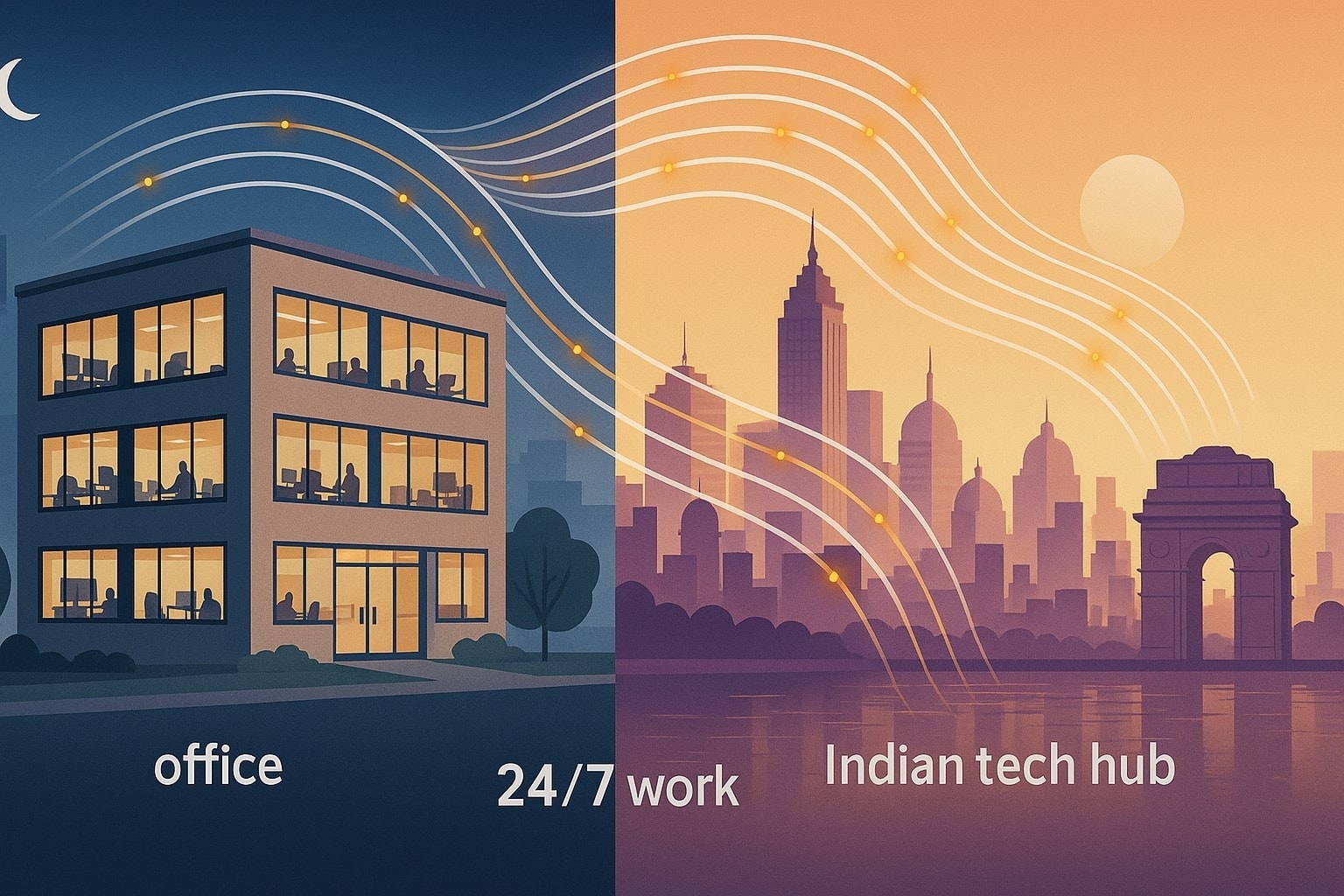
Businesses should consider working with offshore teams in India because they get access to strong talent, lower total cost, and faster delivery than building only local teams. India has one of the largest skilled workforces in the world, along with decades of experience serving global clients.
A well-run Indian offshore team helps you scale product development, customer support, analytics, and back-office work without overloading your core team. It also adds resilience: if one location has issues, another time zone keeps the work moving. This combination of deep technical talent, access to skilled professionals, and specialized skills, along with flexibility and value, is hard to match.
Access to Specialized Talent at Scale
Access to specialized talent at scale is a primary reason companies choose offshore teams in India. You can find engineers, product analysts, designers, finance experts, and support specialists across hundreds of niches.
Indian talent ecosystems around Bengaluru, Hyderabad, Pune, Chennai, NCR, and other hubs support large and small firms. Example: a US fintech can assemble a 10-person data team with strong SQL, Python, and BI skills in 1–2 months, which might take 6–9 months locally. This speed of hiring matters when product roadmaps move quickly.
Cost Savings Advantage Without Losing Quality
The cost advantage without losing quality gives Indian teams a clear edge. Salary and overhead levels are lower than in North America and Western Europe, yet top performers still deliver strong outcomes.
Instead of treating this as a way to hire “cheap,” think of it as a way to fund 1.5–2 teams for the price of 1. This allows you to add QA, DevOps, or analytics capacity that you might otherwise delay. The key is to invest savings back into quality: better tooling, training, and leadership. This approach maximizes cost efficiency by reducing operational costs and optimizing resource use while maintaining high standards.
24/7 Operations and Faster Delivery
Offshore teams in India support 24/7 operations and faster delivery by working while your home team sleeps. The time zone gap between India and North America is roughly 9–12 hours, which you can turn into an advantage.
For example, a US product team hands over specifications and bugs at the end of their day. The Indian team picks them up, codes or tests overnight, and shares updates before the US team logs in. Allowing team members to work flexible hours helps create overlapping work windows, maximizing productivity and ensuring smooth handoffs. Used correctly, this “follow-the-sun” cycle can cut release timelines by 25–40%.
Strategic Presence in a Mature Tech Ecosystem
A strategic presence in a mature tech ecosystem is another strong reason to offshore to India. India stands out as an offshore country due to its robust infrastructure and deep talent pool, making it a preferred destination for global businesses. The country now has thousands of product companies, startups, and GCCs (Global Capability Centers) for global brands.
This ecosystem creates strong secondary benefits: candidates move across firms, best practices spread quickly, and support services such as training, coworking, and compliance are easy to find. Your offshore team plugs into this network and keeps up with modern methods in cloud, AI, cybersecurity, and product thinking.
Local nuances matter — use best practices for cultural alignment in offshore teams to bridge expectations.
How to Work Effectively With Offshore Teams in India?
To work effectively with offshore teams in India, you need clear goals, defined ownership, and a repeatable rhythm for collaboration. Treat the offshore team as a core part of your company, not a temporary contractor.
The best relationships start with strong onboarding, shared documentation, and a working agreement that covers scope, communication, and decision rights. Once this foundation is in place, you can scale the team with less friction.
Set Clear Goals and Ownership for Managing Offshore Teams From Day One
Setting clear goals and ownership from day one is the first step to effective collaboration. Your Indian team needs to know what success looks like, who decides priorities, and which metrics matter.
Translate business outcomes into measurable targets: for example, “reduce checkout failures by 30% in Q2” instead of “improve checkout.” Assign owners for each goal on both sides so there is no confusion. Make sure the entire team is aligned and understands their responsibilities. This removes rework and reduces back-and-forth emails.
Build a Strong Onboarding Journey
Building a strong onboarding journey helps new offshore members become productive in 2–4 weeks instead of 2–3 months. Onboarding must include company context, product overview, architecture, ways of working, and access to tools.
Create a 10–15 step onboarding checklist covering environment setup, key documents, and intro calls with cross-functional partners. For example:
- Access tools (code repo, project board, communication channels).
- Walk through product demo recordings.
- Review architecture and coding standards.
- Shadow live stand-ups and retrospectives.
When every new hire follows the same path, quality of delivery stays consistent even as you scale. Comprehensive onboarding documentation and standardized processes also make it easier for future team members to integrate smoothly as your team grows.
Use Written Processes and Playbooks
Using written processes and playbooks reduces misalignment when teams sit across continents. Managing offshore teams requires clear documentation to bridge distance and time zone gaps. Written processes cover topics such as release management, incident response, ticket triage, and code review.
Document key flows in short pages with steps, owners, and examples. For instance: “All production incidents follow this 7-step playbook, with the on-call engineer in India leading the first response.” Written guidance prevents knowledge from sitting only in people’s heads.
Schedule Regular Check-Ins and Ceremonies
Scheduling regular check-ins and ceremonies keeps everyone aligned across time zones. These practices are especially important for remote teams to maintain cohesion and productivity. Agile rituals such as daily stand-ups, weekly planning, backlog grooming, and retros work well with Indian offshore teams.
Pick meeting slots that create at least 2–3 hours of overlap between regions. Keep meetings structured and time-boxed, with clear agendas and notes. This rhythm sets a predictable heartbeat for the team.
Agree on Decision-Making Rules
Agreeing on decision-making rules avoids bottlenecks when leaders are asleep or in meetings. Decide which choices offshore leads can make independently and which require onshore approval.
For example, define that engineers in India can choose libraries within approved stacks, estimate work, and ship behind feature flags, while larger product direction decisions stay with the home product manager. When this is explicit, work keeps moving even without constant supervision.
What to Know About Communication When Working With Teams in India?
When working with teams in India, you must design communication so it is clear, respectful, and structured. Communication gaps are the most common reason offshore projects fail, even when talent is strong.
Teams in India usually communicate well in English but may adopt a polite tone that hides disagreement. Your job is to create space for questions, pushback, and honest feedback, while keeping conversations focused on outcomes.
Choose the Right Channels for Each Purpose
Choosing the right channels for each purpose keeps communication structured. Use instant messaging for quick questions, video calls for complex topics, and project tools for work tracking.
Set rules such as “critical issues go on the incident channel with @mentions” and “decisions go in the project tracker, not only in chat.” Platforms like Slack or Microsoft Teams are effective for managing communication across distributed teams, especially when dealing with different time zones and limited in-person meetings. This prevents lost information and ensures everyone knows where to look for updates.
Create Communication Rituals and Templates
Creating communication rituals and templates reduces confusion. For example, ask engineers to share a short daily update with 3 points: what they finished, what they are doing next, and any blockers.
You can also provide templates for status reports, release notes, and design proposals. When everyone uses the same formats, leaders and stakeholders scan updates quickly without long calls.
Handle Questions and Escalations Quickly
Handling questions and escalations quickly builds trust with your Indian team. If they wait 24 hours for a reply to a blocking question, you lose 1 full workday.
Nominate “responders” or “duty leads” in the home timezone who keep an eye on critical channels. Aim to answer blockers within 2–4 business hours during overlap time. This simple practice can raise throughput by 20–30%.
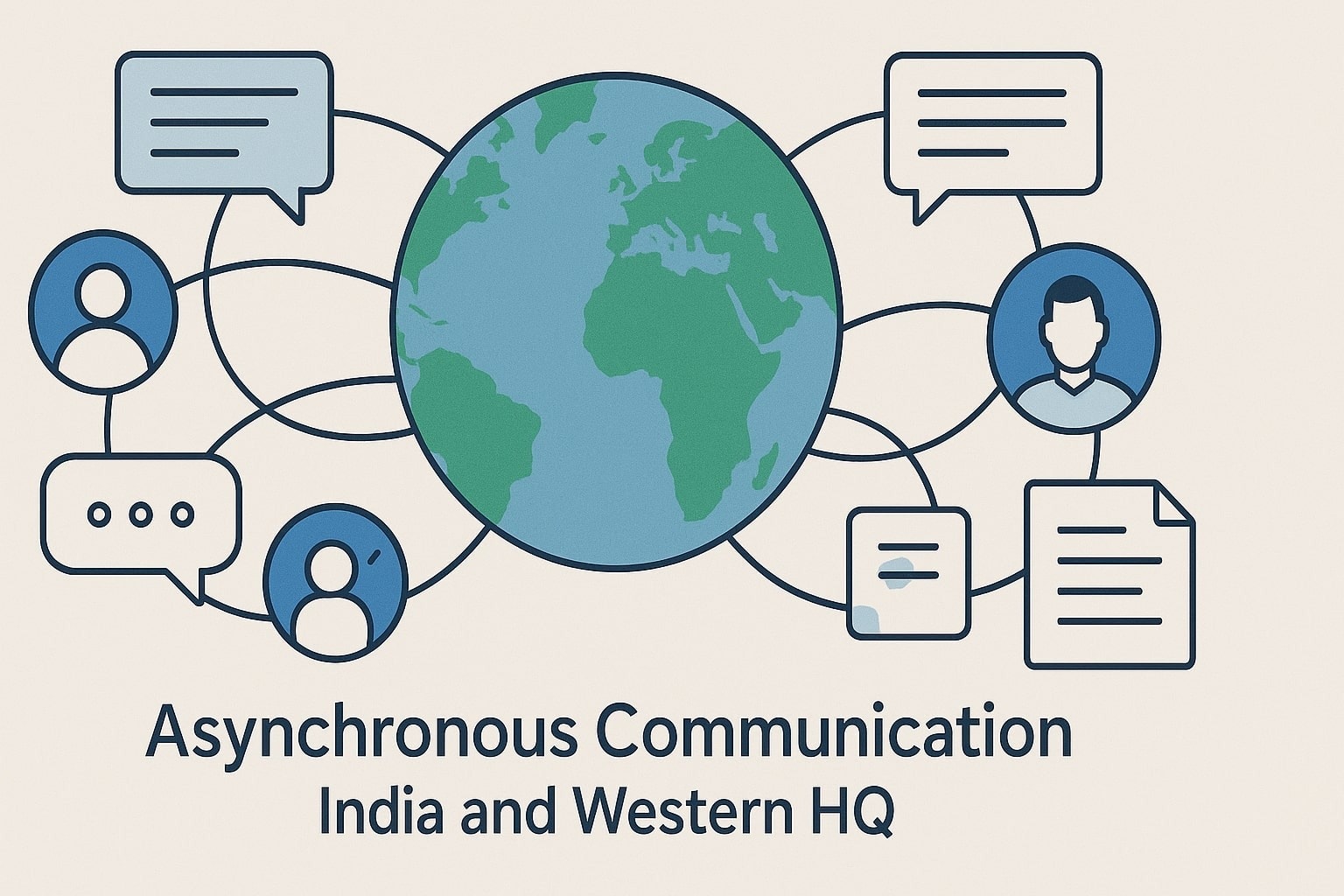
Make Asynchronous Communication the Default
Making asynchronous communication the default keeps projects moving even when no one is online together. Encourage detailed written specs, design docs, and test plans that others can read in their morning.
Record key meetings and store them with clear titles and timestamps. Ask people to comment on documents rather than waiting for the next call. Over time, your team relies less on real-time conversations and more on durable written knowledge.
Onboarding and training offshore teams are especially important when scaling in India.
How to Build Collaboration With Offshore Indian Teams?
To build collaboration with offshore Indian teams, you must create one unified team where everyone shares context, responsibility, and wins. Separate “onsite versus offshore” silos lead to mistrust and slower delivery.
Strong collaboration grows when people plan together, solve problems together, and celebrate milestones together. It also depends on informal human connection, not just task boards.
Create One Integrated Team, Not Two Camps
Creating one integrated team means everyone works from the same backlog, tools, and standards. Avoid giving offshore teams only low-priority tasks or maintenance tickets.
Mix squads so that engineers in India and the home country work under the same product manager, designer, and tech lead. Forming a dedicated team ensures better integration and focus on shared goals. This setup helps everyone see the full product picture and reduces “us vs. them” thinking.
Share Business Context, Not Just Tasks
Sharing business context, not just tasks, helps offshore team members make better decisions. They need to understand customers, market position, and business models, not only JIRA tickets.
Invite the Indian team to roadmap presentations, customer interviews, and post-mortems. When they know why a feature matters, they can suggest better solutions and catch risks early.
Run Joint Planning and Retrospectives
Running joint planning and retrospectives makes collaboration more transparent. During planning, let both teams estimate effort, identify dependencies, and propose trade-offs. Adopting agile methodologies supports transparent collaboration and continuous improvement by encouraging regular feedback, adaptive planning, and iterative progress.
In retrospectives, ask what worked and what did not from both locations. Capture 3–5 concrete action items and assign owners on both sides. Over time, this loop sharpens how you work together.
Encourage Informal Connections and Recognition
Encouraging informal connections and recognition keeps morale high. Remote work can feel transactional if every interaction is about deadlines or bugs.
Set up virtual coffee chats, interest-based channels, or small games. Organize virtual team building activities and other team building activities to strengthen relationships and promote inclusiveness. Team building is essential for creating unity and trust in geographically dispersed teams. Recognize wins in all-hands calls, not just in local team meetings. Hearing a CEO or VP thank an engineer in India by name has a strong impact.
Sample collaboration rhythm
|
Activity |
Purpose |
Recommended Cadence |
|
Global stand-up |
Align on daily priorities |
Daily |
|
Sprint planning |
Commit to next 1–2 weeks of work |
Every 2 weeks |
|
Design or architecture review |
Align on technical and UX decisions |
Weekly |
|
Retrospective |
Improve collaboration and process |
Every 2 weeks |
|
Informal virtual hangout |
Build relationships and trust |
Monthly |
What Tools to Use When Working With Offshore Teams in India?
When working with offshore teams in India, you should select tools that support transparency, real-time updates, and asynchronous work. The exact products can vary, but the tool categories stay similar.
Choose tools that your team already understands or can learn quickly. Consistency matters more than chasing every new platform.
Project and Work Management Tools
Project and work management tools keep priorities clear across time zones. Common choices include agile boards and ticketing systems that show who is doing what and by when. These tools facilitate agile project management by enabling teams to adapt quickly and stay aligned with project goals, which is especially important for offshore teams.
Use features like swimlanes, labels, and custom fields to group work by squad or product area. Ensure that every piece of work lives in the system; avoid parallel spreadsheets that only one location sees.
Communication and Meeting Tools
Communication and meeting tools support daily collaboration. Teams usually combine instant messaging, video calls, and email.
Look for platforms that support stable connections between regions, recordings, and integrations with calendars and project tools. Encourage cameras for key meetings to build rapport, but avoid exhausting people with constant calls.
Documentation and Knowledge Tools
Documentation and knowledge tools store important information in one shared place. Wikis, document editors, and internal knowledge bases prevent the same questions from repeating.
Create spaces for architecture, onboarding, product specs, and runbooks. Tag pages clearly and keep owners responsible for updates at least once every quarter.
Engineering, QA, and DevOps Tools
Engineering, QA, and DevOps tools are core for technical offshore teams in India. Offshore developers rely on these tools to maintain code quality and streamline collaboration across distributed teams. Code repositories, CI/CD platforms, testing tools, and observability stacks must be accessible to both locations.
Standardize on shared coding guidelines, branching models, and review rules. For QA, use test case management and automated testing where possible, so results are visible regardless of location.
Time Tracking, HR, and Compliance Tools
Time tracking, HR, and compliance tools help manage leaves, holidays, and billing. Even if you do not bill by the hour, basic time tracking shows effort spread across projects.
Use HR systems that support Indian holidays and regulatory needs. This reduces manual work and avoids surprises around payroll, overtime, or compliance.
How to Manage Cultural Differences and Time Zones in India?
To manage cultural differences and time zones in India, you need awareness, empathy, and explicit agreements. Culture shapes how people give feedback, show disagreement, and handle deadlines.
Indian teams often value politeness and respect for seniority. Combined with time zone gaps, this can create hidden issues if you do not invite open conversation and set clear working hours.
Understand Work Styles and Hierarchy
Understanding work styles and hierarchy prevents misread signals. Team members in India may hesitate to say “no” directly or to challenge a senior person in a group call. Identifying and bridging cultural gaps and cultural barriers is essential to foster effective collaboration and ensure smooth communication within offshore teams.
Invite questions with phrases like “What risks do you see?” or “What would you do differently?” Make it clear that constructive disagreement is welcome. Respecting cultural differences is key to building trust and inclusivity in offshore teams. Private 1:1s also give people a safer space to raise concerns.
Design Overlap Hours That Work for Both Sides
Designing overlap hours that work for both sides is key to smooth collaboration. Effective scheduling ensures seamless coordination between offshore and onshore teams. You usually need 2–4 hours of live overlap each weekday.
For example, a US West Coast team might agree on 8–10 AM PT / 8:30–10:30 PM IST overlap three days a week, plus 1–2 days where leaders adjust hours. Write this schedule down and respect it so people can plan their personal lives.
Respect Local Holidays and Festivals
Respecting local holidays and festivals shows that you view the Indian team as equal partners. India has 3–5 large national events plus regional holidays.
Maintain a shared calendar listing major holidays for all locations. Plan releases and big launches to avoid those days where possible, or ensure backup coverage from other regions when needed.
Build Psychological Safety Across Cultural Differences
Building psychological safety across cultures helps people raise issues early. Fostering psychological safety is crucial for developing a cohesive offshore team that works harmoniously toward shared goals. Encourage leaders to admit mistakes, ask for feedback, and thank team members who point out problems.
Run occasional sessions where people share aspects of their culture, work habits, and expectations. These conversations deepen trust and reduce misinterpretations of tone in messages.
Hire offshore teams with Flexiple and get top talent without compromising on quality.
How to Track Performance With Indian Offshore Teams?
To track performance with Indian offshore teams, focus on outcomes, quality, and collaboration, not just hours logged. Clear metrics create a shared understanding of success.
Performance tracking should support coaching and growth rather than blame. When everyone sees the same numbers, difficult conversations become easier and more objective.
Define Outcome-Based KPIs and SLAs
Defining outcome-based KPIs and SLAs sets the foundation. Clear metrics help you manage your offshore team effectively by providing objective benchmarks for performance and driving continuous improvement. For each team, agree on 3–5 metrics such as deployment frequency, lead time for changes, defect escape rate, or customer satisfaction scores.
Document these targets in a simple scorecard that both onshore and offshore leaders review weekly or monthly. This keeps discussions focused on impact instead of personal opinions.
Create Transparent Dashboards
Creating transparent dashboards lets everyone see progress in real time. Use project boards, analytics dashboards, and monitoring tools that both locations can access. Shared dashboards are essential for successful offshore team collaboration by improving visibility and coordination.
Visualize trends such as cycle time, ticket age, and open bugs. When numbers drift away from targets, people spot issues early and adjust plans.
Run Regular Feedback and Development Conversations
Running regular feedback and development conversations supports long-term performance. Ongoing feedback and recognition help keep the team motivated and engaged. Managers should hold structured 1:1s with Indian team members at least twice a month.
Discuss goals, blockers, and skill development plans. Combine quantitative data with qualitative feedback from peers and stakeholders. This balances hard numbers with human context.
Use Data for Coaching, Not Punishment
Using data for coaching, not punishment, builds trust. A deep understanding of team dynamics and context is essential for interpreting data and driving meaningful improvements. When a metric drops, treat it as a shared problem to solve, not a reason to blame one individual or location.
Ask questions like “What changed in our process?” or “Which constraints slowed us down this sprint?” Over time, this mindset creates a culture where people are honest about risks and open to improvement.
Example role-wise KPIs
|
Role |
Sample KPIs (3–5) |
|
Backend engineer |
Lead time, defect rate, uptime impact, code review turnaround |
|
Frontend engineer |
UI defects, performance scores, accessibility checks, deployment frequency |
|
QA engineer |
Test coverage, escaped defects, automation rate, cycle time for test runs |
|
Customer support analyst |
First response time, CSAT, resolution time, ticket backlog |
FAQs About Working With Offshore Teams in India
1. Is India Still a Strong Offshore Destination?
India is still a strong offshore destination because its talent pool, experience, and infrastructure remain world-class. The country keeps producing large numbers of STEM graduates and experienced professionals.
In addition, product companies and GCCs continue to mature, so your team can hire people who have already worked on global products. This keeps India competitive even as new locations appear.
2. How Much Time Zone Overlap Do We Really Need?
You generally need 2–4 hours of time zone overlap to run an effective offshore model with India. This window covers stand-ups, planning, reviews, and urgent discussions.
Some teams run with slightly less overlap by doubling down on asynchronous documentation and recordings. However, aiming for at least 3 shared hours on 3–4 days each week gives a healthy balance.
3. Should We Visit Our Offshore Team in India?
You should plan in-person visits to your offshore team in India at least once every year if budgets allow. Face-to-face time builds deep trust very quickly.
Use visits for strategic planning, workshops, and social events. After these trips, remote collaboration usually feels smoother and more open.
4. How Do We Protect Data and Security With Offshore Teams?
You protect data and security with offshore teams by applying the same or higher standards you use for internal teams. This includes background checks, secure devices, access controls, and regular security training.
Limit access based on roles, log key actions, and review permissions quarterly. Work with partners who understand Indian regulations as well as global standards.
5. Can Offshore Teams in India Handle Ownership, Not Just Tasks?
Offshore teams in India can handle ownership when you give them clear goals, decision rights, and trusted leaders. Many Indian teams now run entire product lines or service towers for global companies.
Start by letting them own smaller modules or internal tools, then expand ownership as trust builds. The best results come when they have end-to-end responsibility rather than only isolated tickets.
6. What Is the Best Team Size to Start With?
The best team size to start with is usually 3–7 people, which is small enough to manage closely but large enough to deliver real outcomes. This core group often includes a lead plus engineers or specialists.
Once the model works well for 1 squad, you can clone the pattern into 2–3 more squads over the next 6–12 months. This staged growth keeps culture and quality under control.