


Running Agile with offshore teams works best when you use clear processes, strong communication, efficient communication, and shared accountability. When you get these foundations right, global teams deliver high-quality software at a predictable pace. These practices also protect your roadmap from time zone challenges, cultural gaps, and misaligned expectations. Applying agile best practices is foundational for managing offshore teams effectively.
Pair agile ceremonies with tips for managing offshore development teams to improve collaboration. An agile approach helps bridge gaps between distributed and co located teams, enabling distributed teams to match or even surpass the productivity of co located teams through effective agile practices.
Why Is Running Agile With Offshore Teams Important for Global Projects?
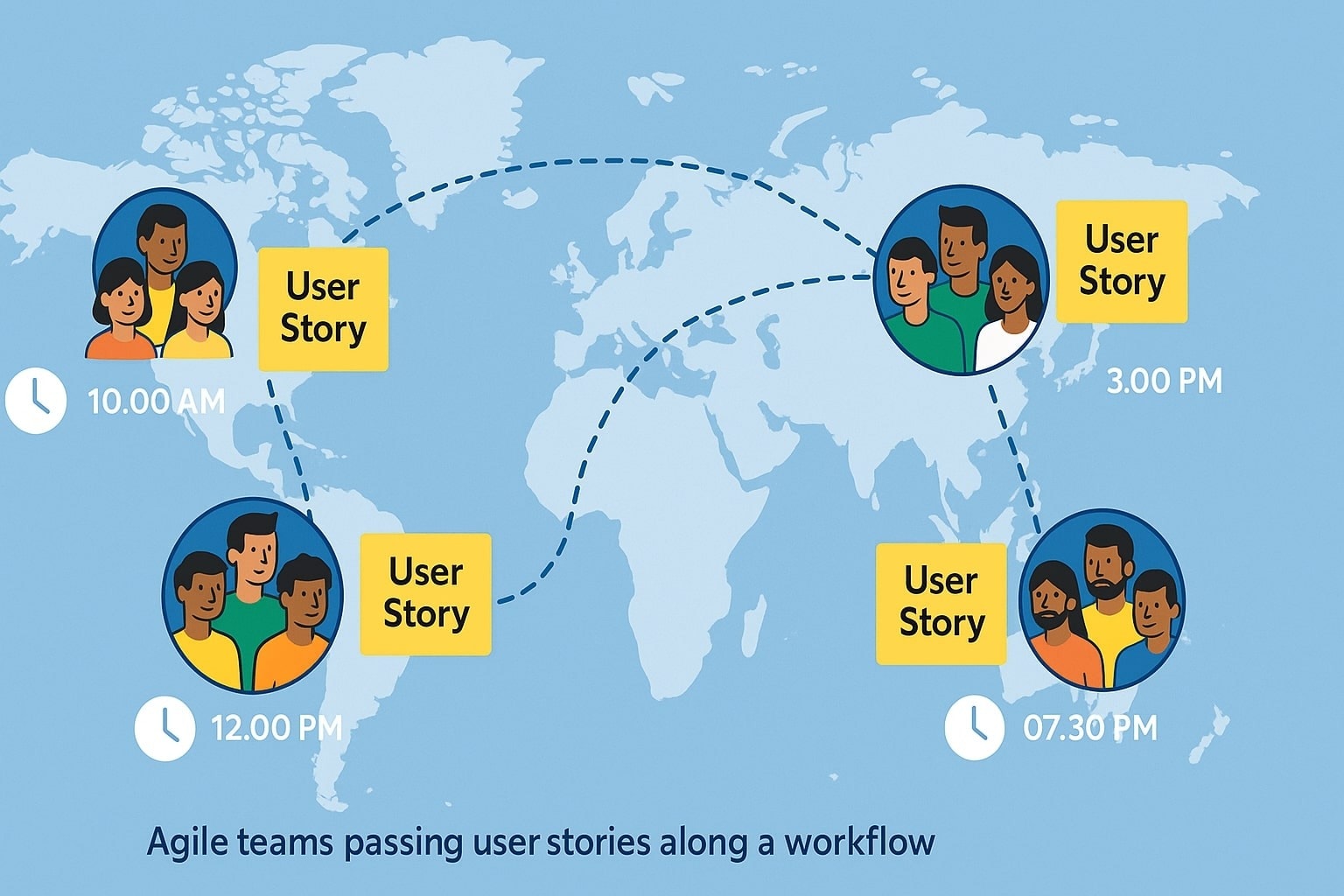
Running Agile with offshore teams is important for global projects because it lets you ship faster, tap wider talent pools, and work around the clock. It turns geography into an advantage instead of a barrier. Done well, an agile project offers flexibility and adaptability, while agile project management ensures continuous feedback and collaboration in global settings. Offshore Agile helps global leaders balance cost, speed, and quality.
Agile Offshore Teams Increase Speed to Market
Agile offshore teams increase speed to market by working in parallel with onshore squads. One team can continue work while another sleeps. This reduces idle time and shortens cycle time from idea to production. By effectively managing the development cycle and adopting iterative development practices, offshore teams can deliver faster through continuous feedback, incremental improvements, and ongoing adaptation.
Distributed Agile Expands Access to Specialized Talent
Distributed Agile expands access to specialized talent by opening hiring to multiple countries and regions. You can find engineers with niche skills that may be rare or expensive locally. When building an offshore development team, it's important to evaluate both technical skills and collaboration abilities to ensure effective teamwork. This makes it easier to form cross-functional teams with the exact capabilities your product needs. Forming a dedicated development team can also streamline project workflows and support scaling as your project grows.
Offshore Agile Supports Follow-the-Sun Development
Offshore Agile supports follow-the-sun development by handing work from one time zone to the next. Leveraging continuous integration and a well-defined agile software process enables seamless handoffs and helps maintain code quality as teams collaborate across regions. User stories move forward almost continuously. This model is especially powerful for incident response, rapid prototyping, and urgent feature delivery.
Global Teams Improve Customer Coverage
Global teams improve customer coverage by aligning some squads with key customer regions. It is important to ensure offshore teams understand the broader business context so their work aligns with customer needs and organizational goals. Support, discovery interviews, and feedback sessions can happen in local business hours. This makes your product more responsive to regional needs and regulations.
How to Run Agile Effectively With Offshore Teams?

You run Agile effectively with offshore teams by defining shared ways of working, over-communicating priorities, and using explicit agreements. Everyone needs the same picture of goals, roles, and timelines. Clarity reduces friction more than any specific framework.
Define Clear Agile Goals and Outcomes
Clear Agile goals and outcomes keep offshore teams aligned around the same results. Each quarter, define a small set of product and business outcomes, not just output. Make sure every team understands how their backlog connects to these outcomes.
In offshore agile environments, clear goals and a shared understanding are essential for project success.
Align Roles and Responsibilities Across Locations
Roles and responsibilities must be aligned across locations so nobody guesses who owns what. Decide who acts as Product Owner, Scrum Master, team lead, and Tech Lead for each squad, especially to guide and oversee offshore teams. Document ownership for backlog, architecture, deployment, and incident response.
Create a Shared Definition of Done
A shared Definition of Done ensures that “done” means the same thing in every time zone, and highlights the importance of a consistent development environment for maintaining quality. Include coding standards, tests, documentation, and deployment criteria. Review and refine this definition regularly so quality stays consistent as teams grow.
Establish a Reliable Communication Cadence
A reliable communication cadence keeps offshore teams synchronized. Use a fixed rhythm for sprint planning, reviews, retrospectives, and backlog refinement. Time these ceremonies so each location can join at least part of the call or receive a clear summary. Understanding how different communication tools work is essential for effective collaboration across locations.
Document Decisions and Ways of Working
Documenting decisions and ways of working prevents misalignment when people are offline. Capture meeting notes, architecture choices, and process changes in a shared space. Encourage engineers to write short decision records so context is never trapped in private chats. Sharing documentation ensures the entire team stays aligned and informed.
For foundational collaboration rules, revisit how to work with offshore teams.
What Tools Should You Use for Agile Collaboration With Offshore Teams?
You should use a focused set of collaboration tools for Agile offshore teams so everyone works from the same source of truth. The exact brands matter less than consistent habits and adoption. Choose tools that support transparency, async updates, and quick feedback.
Use Work Management Tools for Backlogs and Sprints
Work management tools manage backlogs, sprints, and Kanban boards, and include task management tools like Trello, Jira, or Asana for all locations. They let teams track user stories, tasks, and bugs in one place. This visibility reduces confusion over what is in scope for the current sprint.
Use Communication Tools for Sync and Async Discussions
Communication tools support both live conversations and async updates. Video calls enable planning and reviews, with real-time communication tools like Microsoft Teams providing secure and immediate connections for Agile teams. Chat channels handle quick questions. Written async updates help people catch up without late-night calls.
Use Code Repositories and Review Platforms
Code repositories and review platforms coordinate development across time zones. Branching strategies, pull requests, and code reviews create structure. They keep quality high even when teams rarely pair in real time. These platforms also help integrate offshore developers into the development workflow, enabling seamless collaboration regardless of location.
Use CI/CD Pipelines for Automated Delivery
CI/CD pipelines automate builds, tests, and deployments for offshore teams, and these practices are essential for managing offshore projects efficiently. Every commit triggers checks so issues surface quickly. This reduces the risk of surprises when code from different locations merges.
Example Collaboration Tool Stack for Offshore Agile
Collaboration technologies streamline communication and teamwork in offshore agile environments. A simple comparison table helps decide which category of tool covers which need.
|
Need |
Tool Category |
Primary Purpose |
|
Plan sprints and track work |
Agile work management |
Backlog, boards, velocity, sprint reports |
|
Daily communication |
Chat and video conferencing |
Standups, quick questions, team meetings |
|
Code collaboration |
Source control and review |
Versioning, pull requests, code reviews |
|
Build and deploy |
CI/CD pipeline |
Automated tests, packaging, deployments |
|
Knowledge sharing |
Documentation and wikis |
Decisions, runbooks, onboarding guides |
What to Focus On During Agile Sprint Planning With Offshore Teams?
During Agile sprint planning with offshore teams, you should focus on clear priorities, realistic capacity, and shared understanding of each story. Planning is the moment where misalignment creeps in most easily. A disciplined approach prevents rework later in the sprint.
Prepare the Backlog Before the Planning Meeting
The backlog should be prepared before the planning meeting so you do not waste time clarifying basics. Product Owners and Tech Leads groom stories, using agile techniques like story mapping and prioritization, add acceptance criteria, and rank priorities. Offshore engineers review items in advance and note questions.
Align on Capacity Across Time Zones and Holidays
Capacity planning must factor in local holidays, vacations, and overlapping hours. Create a simple view of who is available in each location. Use that to adjust story points or number of stories to avoid overcommitting.
Break Work Into Right-Sized, Testable Stories
Right-sized, testable stories make it easier for distributed teams to collaborate, a practice strongly supported by agile methods. Stories should be small enough to finish within a sprint and include clear acceptance tests. This reduces handoff delays and confusion over what “complete” means.
Clarify Dependencies and Handoffs
Clarifying dependencies and handoffs keeps work flowing across time zones. Identify stories that require input from another team or specialist. Decide how and when handoffs will happen so nobody blocks overnight.
Ensure everyone understands agile by training offshore teams on your chosen rituals and tools.
How to Improve Daily Agile Standups With Offshore Teams?
You improve daily Agile standups with offshore teams by making them short, focused, and friendly to async participation. The goal is to share status and unblock work, not to hold long discussions. Format matters more than strict timing when teams are global.
Choose a Standup Format That Respects Time Zones
Choose a standup format that respects time zones so nobody joins at extreme hours every day. Some teams run two shorter standups that overlap in a small window. Others use a rotating schedule so the inconvenience is shared.
Encourage Async Written Standup Updates
Async written standup updates let everyone stay informed even if they cannot attend live. People answer “yesterday, today, blockers” in a shared channel before a set time. The live standup then focuses only on blockers and key decisions.
Keep Standups Focused on Progress and Blockers
Standups stay effective when they focus on progress and blockers, not problem-solving. When complex issues arise, create a follow-up call with only relevant people. This protects the time of the whole team and keeps the ritual predictable.
Use Standups to Reinforce Team Connection
Standups also reinforce team connection by giving a brief daily human touchpoint. Encourage quick wins, recognition, and appreciation. Small moments of connection help remote teammates feel part of one squad, not separate offices.
How to Manage Time Zones in Agile Offshore Teams?
You manage time zones in Agile offshore teams by designing schedules, overlaps, and processes around them. Time zones become a structural constraint that you plan for, not an afterthought. Good design avoids burnout and unnecessary delays.
Map Time Zone Overlaps and Core Hours
Mapping time zone overlaps and core hours shows when real-time collaboration is possible. Create a simple chart of working hours for each location. Agree on a daily or weekly window where most people are online together.
Decide Which Work Requires Real-Time Collaboration
Deciding which work requires real-time collaboration helps you use overlap hours wisely. Activities like planning, reviews, and complex design usually need live discussion. Deep coding, documentation, and testing can happen async.
Use Async-Friendly Practices for Most Work
Async-friendly practices reduce the need for late-night meetings. Detailed task descriptions, clear acceptance criteria, and thorough code reviews replace back-and-forth calls. Teams learn to leave context in the tools, not in their heads.
Protect Work-Life Balance Across Locations
Protecting work-life balance keeps offshore Agile sustainable. Avoid repeating meetings outside normal hours for the same region. Take regular feedback on meeting times and adjust when patterns cause fatigue.
How to Ensure Quality With Continuous Delivery in Agile Offshore Teams?
You ensure quality with continuous delivery in Agile offshore teams by baking checks into the pipeline instead of relying on heroics. Automated tests, code reviews, and monitoring protect quality regardless of location. The system, not individuals, carries the load.
Build a Strong Automated Testing Suite
A strong automated testing suite catches issues early across time zones. Start with unit and integration tests for key services. Add end-to-end tests for critical user journeys so releases stay safe even when teams are pushing code from different regions.
Enforce Consistent Code Reviews
Consistent code reviews maintain standards across offshore squads. Define simple review rules for readability, security, and performance. Rotate reviewers from different locations to share knowledge and avoid silos.
Use Feature Flags and Progressive Rollouts
Feature flags and progressive rollouts let teams deploy often while limiting risk. New features ship behind flags and roll out to small user segments first. This gives teams time to monitor behavior and roll back quickly if problems appear.
Monitor Production and Share Observability Dashboards
Monitoring production and sharing observability dashboards make issues visible to everyone. Metrics, logs, and traces should be accessible to all teams. When an incident occurs, on-call engineers in any region can start triage without waiting for another location to wake up.
Hire best offshore teams with Flexiple. With a network of top-tier global developers and designers, Flexiple helps you scale fast without sacrificing quality. Every expert is rigorously vetted, ensuring you get talent that delivers consistent, reliable results for your project.
FAQs About Running Agile With Offshore Teams
1. How Do You Maintain Culture With Offshore Agile Teams?
You maintain culture with offshore Agile teams by being intentional about rituals and communication. Share company values often and show how decisions reflect them. Use virtual socials, buddy programs, and cross-location pairing to build relationships.
2. How Do You Measure Success for Offshore Agile Teams?
You measure success for offshore Agile teams using both delivery and outcome metrics. Track cycle time, deployment frequency, and defect rates alongside product impact metrics. Review these in joint retrospectives so all locations own the results.
3. How Long Does It Take to Stabilize Offshore Agile Teams?
It usually takes three to six months to stabilize offshore Agile teams. This period covers forming the team, refining processes, and tuning ceremonies. Set expectations that early sprints are for learning, and adjust capacity until velocity becomes predictable.
4. What Is the Best Team Structure for Offshore Agile?
The best team structure for offshore Agile is usually cross-functional squads, each owning a product area. Try to keep most team members in one or two locations to reduce coordination overhead. Use clear interfaces between squads so dependencies stay manageable.
5. How Do You Handle Security and Compliance With Offshore Teams?
You handle security and compliance with offshore teams by applying the same standards everywhere. Use role-based access, secure coding guidelines, and regular audits. Provide training so every engineer understands data handling rules and regional regulations.