


The best time zones for offshore accounting teams are those that give strong working-hour overlap with your finance leaders while still taking advantage of cost and talent benefits. As the accounting industry continues to evolve, with firms adapting to new technologies and operational models, time zones are becoming increasingly important for maintaining efficiency and competitiveness. These zones help you run closing cycles, reporting, and reconciliations without delays. When you choose them carefully, your accounting operations stay responsive, accurate, and round-the-clock.
Choose time-zone overlap as part of broader staffing decisions outlined in effective strategies for offshore bpo teams. Many accounting firms are embracing offshore outsourcing to improve efficiency, reduce costs, and access specialized talent in a rapidly changing market.
Why Do Time Zones Matter When Working With Offshore Accounting Teams?
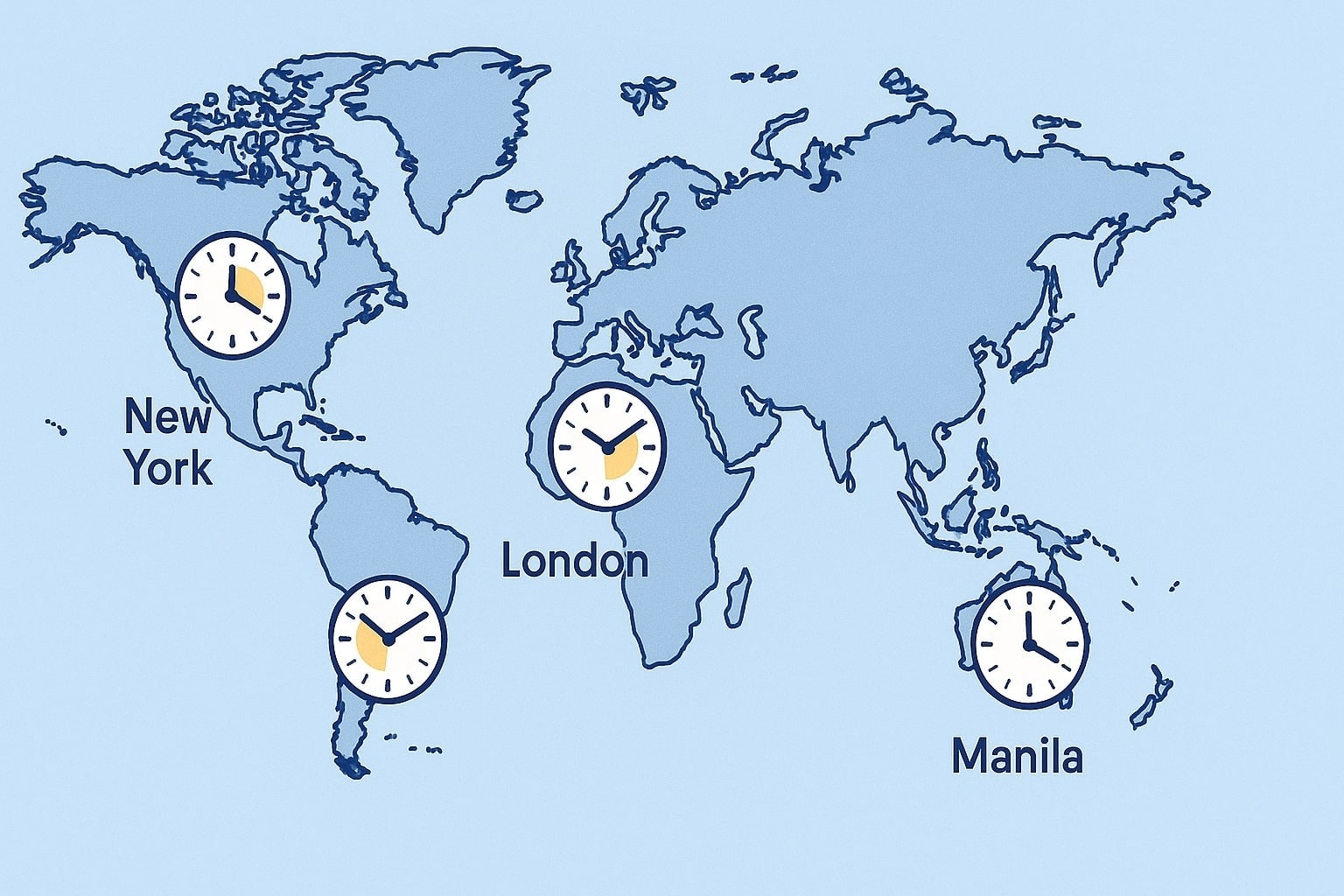
Time zones matter when working with offshore accounting teams because they decide how quickly you can respond to issues, approve entries, and close books. If overlap is too small, even simple approvals can take a full day. Good overlap shortens feedback loops and keeps cash flow and compliance on track. Selecting the right time zones can also provide a competitive advantage by enabling faster turnaround and more agile service delivery.
Well-chosen time zones also protect work-life balance for both onshore and offshore staff. Accounting deadlines such as month-end close or audit support are intense. Matching hours in a thoughtful way lowers stress and reduces errors during busy periods. Offshore strategies not only improve operational efficiency but also help firms save money while maintaining high-quality standards.
As more firms build remote teams across borders, effective time zone management is crucial for ensuring seamless collaboration, productivity, and success in distributed work environments.
Time Zones Shape Turnaround Times
Time zones shape turnaround times because they control how often teams can talk in real time. When there is at least a two- to four-hour overlap, accountants can clarify questions quickly and avoid long email chains, especially for routine tasks like data entry or invoice processing that benefit from real-time communication and quick turnaround. This makes tasks like revenue recognition or vendor reconciliation much smoother.
Time Zone Differences and Overlap Affect Control and Compliance
Overlap affects control and compliance by determining how fast reviewers can check and approve work. Controllers, CFOs, and managers often sit onshore, while preparers work offshore. Using key performance indicators to measure the effectiveness of overlap helps ensure teams maintain control and compliance by tracking approval times and deadline adherence. Without overlapping hours, sign-offs slow down and deadlines become harder to hit.
Time Zones Influence Employee Experience
Time zones influence employee experience by setting when people must attend meetings. If every check-in happens late at night for one side, fatigue builds up. A balanced schedule that respects both regions keeps offshore teams engaged and reduces attrition, supporting the well-being and engagement of the entire team.
What Are the Best Time Zones for Offshore Accounting Teams?
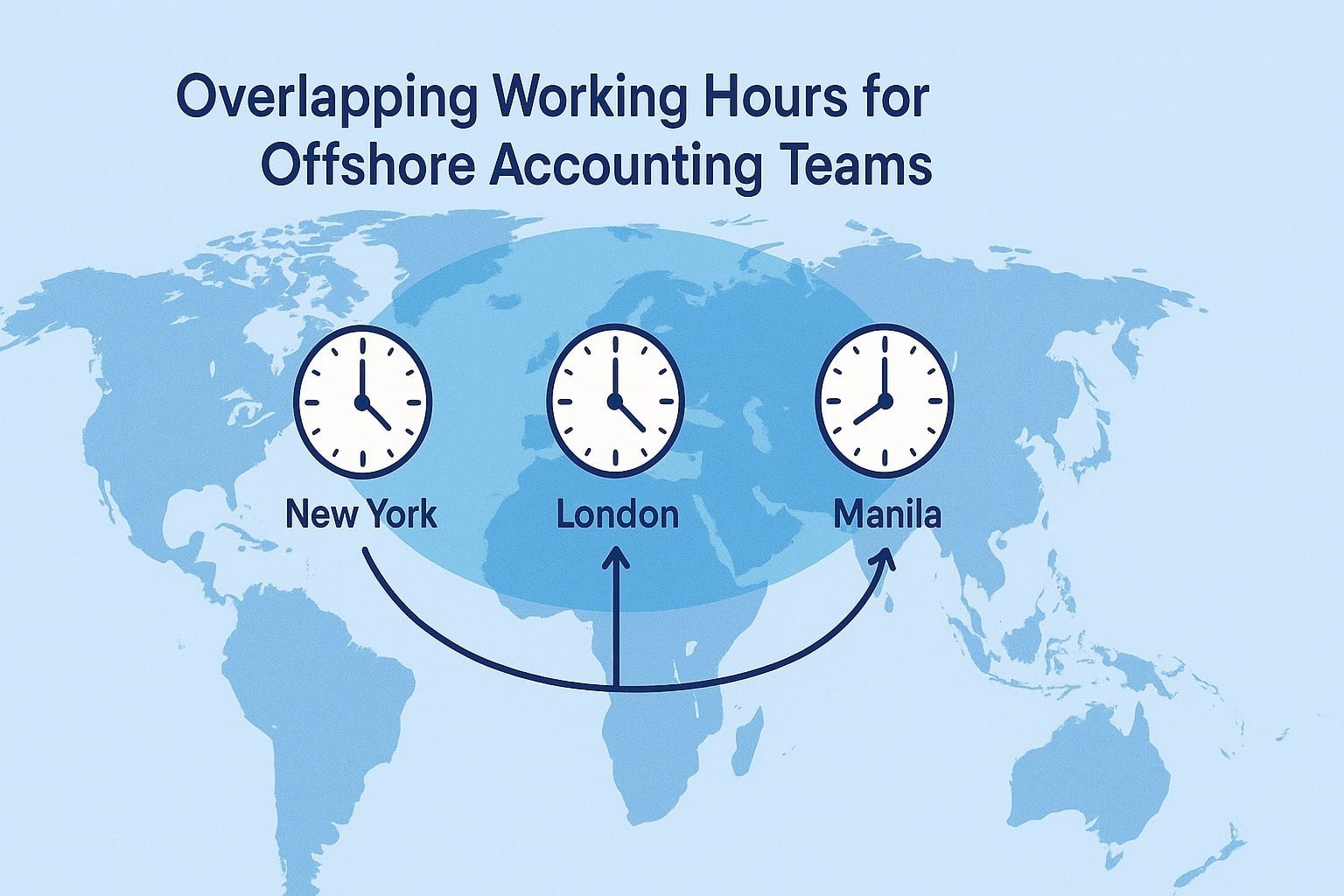
The best time zones for offshore accounting teams are those that give at least a two- to five-hour daily overlap with your head-office finance team. These usually sit within one “neighboring” band of your main region, not on the opposite side of the world. Exact choices differ for US, European, and Asia-Pacific companies.
For accounting, real-time conversations are critical during close, audits, and tax filings. So the “best” zone is not only cheap or popular; it is the zone that lets preparers and reviewers work together in the same half of the day.
Ideal Time Zones for US-Based Companies
Ideal time zones for US-based companies are usually in Latin America or the Caribbean. These regions share similar business hours with US Eastern or Central time, which benefits both the local team and offshore teams by making collaboration easier. That makes it simple to hold daily check-ins, closing meetings, and urgent issue calls.
Ideal Time Zones for European Companies
Ideal time zones for European companies are often in Eastern Europe, North Africa, or parts of Asia that are only a few hours ahead. This gives enough overlap for joint planning while still allowing offshore teams to finish follow-up tasks later in their day. When most team members are within a few hours of each other, it streamlines joint planning and follow-up tasks. It also supports multilingual work with EU markets.
Ideal Time Zones for Asia-Pacific Companies
Ideal time zones for Asia-Pacific companies are neighboring Asian regions that share similar workdays. Many Asia-Pacific companies work with global teams, so considering time zone alignment is crucial for smooth collaboration and to minimize communication barriers. When teams are aligned within two or three hours, they can collaborate on local tax rules, cross-border payments, and regional reporting requirements.
- For US HQs, near-shore time zones in Latin America often provide the best mix of overlap and cost
- For European HQs, Eastern Europe or nearby zones balance availability and multilingual talent
- For Asia-Pacific HQs, close regional time zones keep teams aligned on local regulations and cut travel time for on-site visits
How to Choose the Most Efficient Time Zone for Your Accounting Operations?
You choose the most efficient time zone for your accounting operations by matching overlap needs, process deadlines, and risk level. The right zone supports fast approvals and clear accountability without forcing extreme schedules. It also aligns with your technology stack and data-access rules.
Before choosing a location, map your core accounting cycles: daily payments, weekly reporting, monthly close, quarterly filings, and annual audits. Each cycle has different sensitivity to time differences. Your chosen zone should support the most critical and time-bound pieces.
Start From Your Headquarters Working Hours
Firm owners should prioritize headquarters (HQ) working hours when planning offshore staffing, as most financial decisions and approvals originate there. Mark the typical working window of your CFO, controller, and FP&A leaders. Then look for offshore zones that can overlap with these core hours.
Map Critical Accounting Processes to Time Windows
You map critical accounting tasks and processes to time windows, as this is essential for effective offshore support. For example, if you run payment runs at 3 PM HQ time, your offshore AP team must be online beforehand. This avoids same-day delays for suppliers and payroll.
Balance Cost, Talent, and Overlap
You balance cost, talent, and overlap instead of selecting purely on price. A lower hourly rate means little if delays cause missed regulatory deadlines. The most efficient zone is the one where strong talent can work comfortably during hours that serve your close and reporting schedules, allowing your in-house team and offshore professionals to collaborate effectively.
What Time Zone Overlaps Work Best for US-Based Accounting Teams?
Time zone overlaps that work best for US-based accounting teams usually provide at least four shared hours between the US and offshore location. This overlap allows for joint close meetings, daily huddles, and urgent escalations. Latin American time zones are often a strong match for US companies.
Some US companies still choose Asian time zones for 24-hour coverage, but they must design schedules more carefully. In those cases, a smaller overlap is enough for handovers, while asynchronous tools handle most communication.
Typical Overlap Patterns for US East Coast
Typical overlap patterns for US East Coast finance teams pair them with Latin American cities that share or nearly share the same clock. This makes it easy to schedule morning or afternoon check-ins without anyone working unusual hours, ensuring both offshore and onshore team members can participate fully without schedule conflicts.
Typical Overlap Patterns for US West Coast
Typical overlap patterns for US West Coast may involve slightly earlier starts for offshore teams so both sides share enough time. Latin American teams can shift schedules by one or two hours to match California mornings or afternoons. Teams manage zone differences with offshore partners by adjusting work schedules to maximize real-time collaboration during overlapping hours.
Example Overlap Table for US Companies
The table below shows how workday overlaps can look for a US business using different offshore regions. It uses approximate standard working hours of 9:00–18:00 in each location.
|
US HQ Location |
Offshore Region Example |
Approximate Shared Working Hours (Local HQ Time) |
Overlap Quality |
|
New York (ET) |
Bogotá (Colombia) |
9:00–18:00 |
Excellent |
|
New York (ET) |
Manila (Philippines) |
20:00–23:00 (previous day in ET) |
Limited |
|
San Francisco (PT) |
Mexico City (Mexico) |
9:00–17:00 |
Very good |
|
San Francisco (PT) |
Bangalore (India) |
7:00–10:00 (PT morning) |
Moderate |
|
Chicago (CT) |
São Paulo (Brazil) |
9:00–17:00 |
Very good |
If India is on your shortlist, our guide on working with offshore teams in india covers regional timing considerations.
How Do European Companies Select the Best Time Zones for Offshore Accounting?
European companies select the best time zones for offshore accounting by looking for regions within two to four hours of their main office. This keeps collaboration easy while still tapping into wider talent pools. Eastern Europe, North Africa, and parts of Asia often meet this requirement.
Because Europe covers several time zones itself, finance leaders also consider where their main markets sit. A company serving Western Europe may pick one zone, while another focused on global operations may choose a zone that supports both EU and US time windows.
Considering EU Regulatory and Language Needs
Considering EU regulatory and language needs is crucial for European companies. Offshore accountants must navigate VAT rules, country-specific reporting formats, and local languages. Time zones that already serve European clients often come with this expertise.
Balancing Overlap With Global Operations
Balancing overlap with global operations becomes important when a European HQ interacts heavily with US or Asia. In such cases, companies might choose a time zone that can bridge regions, such as Eastern Europe supporting both EU mornings and Asia afternoons. To overcome time zone differences, organizations can implement strategic scheduling and clear communication protocols, ensuring effective collaboration across regions.
Aligning With Nearshore and Offshore Teams Mix
Aligning with a nearshore and offshore mix lets European companies split work by complexity and urgency. Nearshore zones handle high-touch tasks like treasury and management reporting, while further offshore zones handle standardized processing. Offshore software development teams also use similar time zone strategies to manage complex workflows, ensuring productivity and effective collaboration across regions.
How to Manage Communication and Scheduling Across Time Zones?
You manage communication and scheduling across time zones by using clear routines, shared calendars, and strong asynchronous habits. The aim is to minimize surprises and reduce the need for last-minute calls outside normal hours. Accounting teams work best when the schedule is predictable.
In accounting, mis-timed communication can slow down reconciliations, payment approvals, and audit responses. A simple, transparent scheduling system keeps everyone aligned and ready for closing milestones.
Time-zone planning pairs with best practices for cultural alignment in offshore teams to smooth handoffs.
Set Core Overlap Hours and Meeting Windows
You set core overlap hours and meeting windows so everyone knows when live discussions can happen. For example, you may agree that 2 PM to 5 PM HQ time is sacred overlap. During this window, you schedule important close meetings and approvals. When setting these meeting windows, it's important to consider different communication styles across cultures to ensure effective collaboration and minimize misunderstandings.
Use Shared Calendars and Time Zone-Friendly Tools
You use shared calendars and time zone-friendly tools like Slack or Microsoft Teams to avoid confusion and help teams coordinate across time zones. Scheduling platforms that automatically convert time zones prevent missed calls. Accounting teams can also add labels such as “month-end lock period” so offshore teams see which days need extra focus.
Build Strong Asynchronous Communication Habits
You build strong asynchronous communication habits to keep work moving outside overlap hours. Accountants share detailed handover notes, attach supporting documents, and record short video explanations for complex issues. This reduces back-and-forth and ensures the next team can pick up work smoothly. Adopting agile practices can further enhance asynchronous collaboration and productivity by providing structured methodologies and flexible scheduling.
How Can Time Zone Differences Improve Accounting Productivity?
Time zone differences can improve accounting productivity when teams use them to create a rolling workday. One group finishes tasks and hands them to another team that is just starting its day. This reduces idle time and shortens the end-to-end cycle for many accounting processes.
Instead of waiting a full day for answers, companies design handoffs so each team begins work with clear instructions. Used well, time differences turn into a productivity multiplier rather than a barrier.
Enable Follow-the-Sun Processing
You enable follow-the-sun processing by splitting tasks into steps that different regions handle in sequence. For example, one team prepares bank reconciliations, and another reviews and posts them. This makes daily cash reporting faster and more reliable, similar to how software development teams use follow-the-sun models to accelerate project delivery by handing off work between global teams for continuous progress.
Spread Workload Across Peak Periods
You spread workload across peak periods such as month-end and quarter-end. Offshore teams can start close tasks earlier or later than HQ, smoothing the pressure curve. This approach helps ensure smooth collaboration across different time zones and reduces overtime, which often leads to mistakes in financial data.
Shorten Response Times for Stakeholders
You shorten response times for stakeholders such as auditors, tax advisors, and business leaders. With teams in different time zones, someone is available for urgent questions for a longer portion of the day. This is especially useful for global companies with operations in several continents.
To hire offshore teams with vetted and top performers, Flexiple is the platform you can trust.
FAQs About Time Zones for Offshore Accounting Teams
1. How Much Daily Overlap Do Offshore Accounting Teams Need?
Offshore accounting teams usually need at least two hours of daily overlap with the onshore team, and four hours is often ideal. This gives enough time for stand-ups, approvals, and urgent issue resolution. Heavier close periods may require temporary extended overlap.
2. Is It Better to Use Nearshore or Far-Shore Time Zones?
It is better to use nearshore time zones when you need frequent real-time collaboration and complex judgment calls. Far-shore time zones work well for standardized, rules-based work that can run with strong documentation. Many companies use a mix of both.
3. How Do You Avoid Night Shifts for Offshore Teams?
You avoid night shifts by choosing zones with natural overlap and designing schedules around shared working hours. When far-shore teams are needed, you rely more on asynchronous communication and fewer live meetings. This protects health and retention.
4. Can Time Zone Choices Change as the Company Grows?
Time zone choices can change as a company grows and enters new markets. You may start with one zone and later add another region to support new time windows. The key is to review overlap and workload regularly and adjust your model.
5. What Is the First Step in Choosing a Time Zone for Offshore Accounting?
The first step in choosing a time zone for offshore accounting is mapping your current finance calendar. List daily, weekly, and monthly tasks and note when each must be completed. From there, you can identify which hours truly require collaboration and pick zones that support them.