


The benefits of hiring offshore teams in the Philippines include strong English skills, competitive costs, and a service-focused talent pool that supports global operations. The Philippines is recognized as a leader in the bpo industry, with a strong reputation for delivering offshore outsourcing services and outsourcing services to clients worldwide. Companies across industries use Filipino teams to handle finance, customer support, technology, and back-office work at a high standard. When done with the right partner and processes, the Philippines becomes a long-term extension of your core team.
Filipino teams manage a wide range of work, from technical support to finance and customer service. The Philippines excels at supporting international operations and serving diverse industries through comprehensive offshore outsourcing solutions and offshoring services.
Scale smarter with Flexiple. Build offshore teams of top-tier, pre-vetted talent without the hiring hassle.
Why Do Companies Hire Offshore Teams in the Philippines?
Companies hire offshore teams in the Philippines because the country combines strong human capital with a mature outsourcing industry. The local workforce is familiar with working for global brands and handling international customers. This reduces ramp-up time and makes it easier to maintain quality from day one.
Strategic Location and Time Zone Benefits
The Philippines sits in a time zone that can cover both Asia-Pacific business hours and extended windows for Europe and North America. Companies can run follow-the-sun operations using Philippine teams for late-night or early-morning shifts. This flexibility helps global firms support customers and internal teams almost around the clock. These time zone advantages are especially valuable for global businesses seeking seamless international support.
Mature Offshore Outsourcing Ecosystem
The country has a long history in business process outsourcing and shared services. The Philippines is also recognized for its expertise in providing center services such as call center operations, customer support, technical support, and back-office support to global clients. Many employees have already worked in structured, metrics-driven environments. This experience means offshore partners in the Philippines usually understand SLAs, KPIs, and continuous improvement practices.
Stable Business and Infrastructure Environment
Major cities in the Philippines offer reliable office infrastructure, connectivity, and talent pipelines from universities. Government support for the outsourcing sector encourages investment and training. In addition, foreign investments in the Philippines have driven the growth of the outsourcing industry and created new opportunities for both local and international stakeholders. Together, these factors create a stable base for long-term offshore operations.
What Are the Key Benefits of Hiring Offshore Teams in the Philippines?
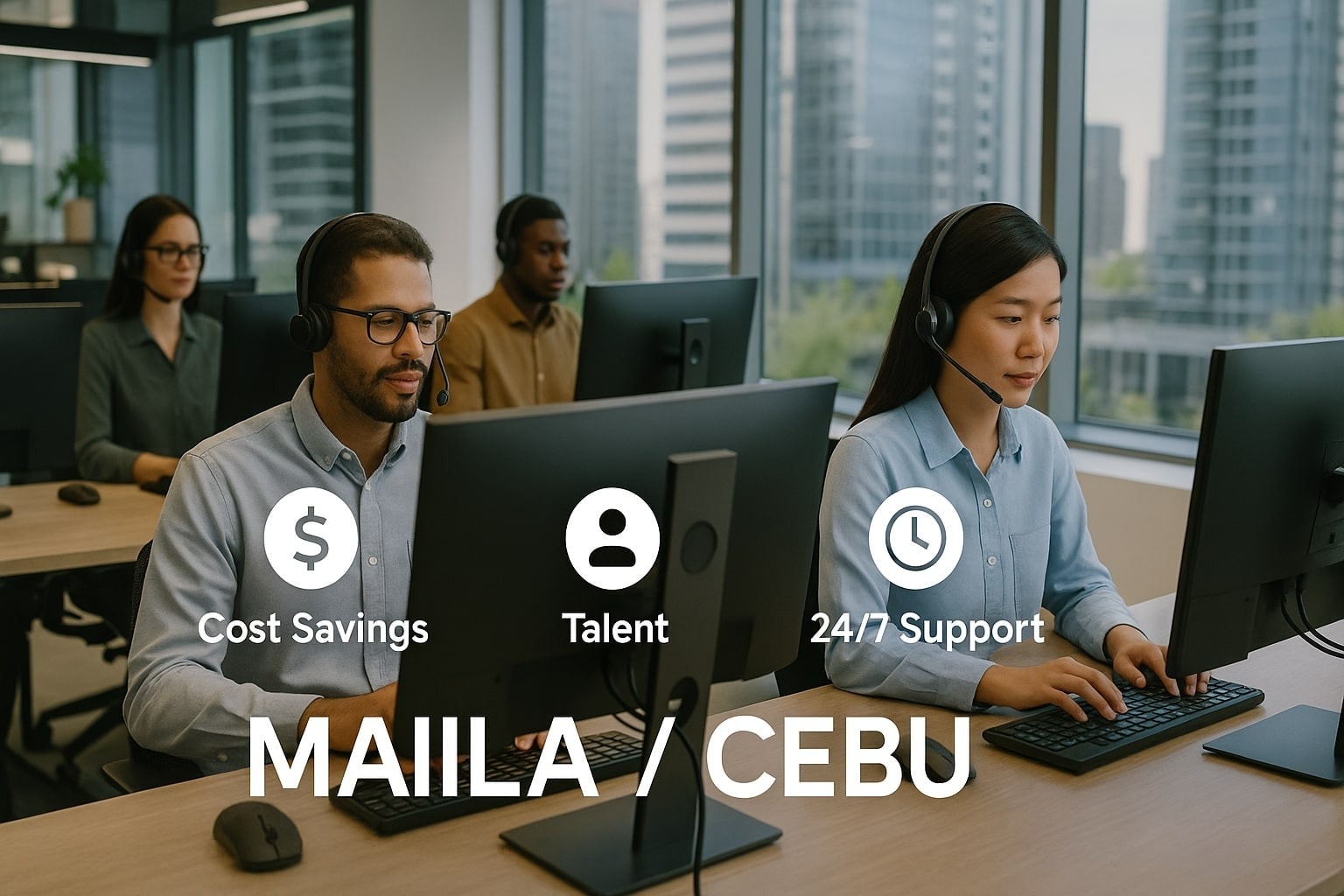
The key benefits of hiring offshore teams in the Philippines are cost efficiency, access to scalable talent, and steady operational support. Businesses can build teams that feel integrated with their headquarters while still taking advantage of local strengths. These benefits apply to both small start-ups and large enterprises.
Before choosing a location, many leaders compare the Philippines with other popular destinations. They often find that English fluency, cultural alignment with Western markets, and customer-service mindset stand out. As a result, the Philippines is frequently selected for customer-facing and finance-related work.
Cost Savings With High Service Quality
Companies can reduce labor and overhead costs while maintaining strong performance. Lower labor costs in the Philippines are a key driver of cost savings for companies offshoring their operations. Filipino professionals are known for attention to detail, empathy, and patience with customers. This combination lets firms keep service quality high even as they control expenses.
Access to Scalable Offshore Team Talent Pools
The Philippines has a large, young workforce that replenishes talent pools each year. Businesses can start with a small pilot team and then scale to dozens or hundreds of employees without rebuilding their training from scratch. Companies can also easily expand their workforce by hiring remote workers in the Philippines to meet changing business needs. This scalability is important for fast-growing companies whose needs shift over time.
Improved Business Continuity and Coverage
Offshore teams in the Philippines support business continuity by providing backup capacity and geographic diversity. If one region faces disruption, Philippine teams can keep essential processes running. This model enhances operational efficiency by ensuring uninterrupted business operations and streamlining workflows. Many organizations use this model to support finance operations, customer support, and IT services.
Compare the Philippines with other hubs using our regional note on working with offshore teams in india.
How Does the Philippines Provide Cost Advantages for Offshore Hiring?
The Philippines provides cost advantages for offshore hiring through competitive wages, lower facilities costs, and flexible engagement models. Companies can achieve significant savings compared with building the same-sized team in high-cost markets. At the same time, they gain access to professionals who have already worked with global processes and tools.
Cost advantages should never mean compromising on quality or ethics. The most successful setups pay fair local wages, invest in training, and focus on long-term retention. This approach protects the employer brand and ensures stability.
Competitive Labor Costs With Strong Skills
Salary levels in the Philippines are generally lower than in North America, Western Europe, or Australia, even for skilled roles. Many professionals bring prior experience with foreign clients and strong English proficiency. The Philippines has a proven track record of successfully serving international clients across various sectors. This creates a favorable balance between cost and capability.
Reduced Overheads and Infrastructure Expenses
Office space, utilities, and support services often cost less in Philippine cities than in major Western hubs. When working with an offshore partner, businesses may also share infrastructure such as HR, IT support, and security. Choosing a reliable service provider is crucial to maximize the benefits of shared services and cost savings. These shared services further reduce total cost per employee.
Flexible Engagement Models
Firms can choose from different models such as dedicated teams, staff augmentation, or project-based engagements. Dedicated models give the deepest integration with company culture, while project-based models help test the waters. Flexibility lets organizations match spending to their growth stage. Each engagement model can significantly influence the hiring process, affecting how candidates are selected, onboarded, and integrated into remote or offshore teams.
If you want dedicated squads, also read benefits of hiring offshore dedicated development teams.
Sample Cost Comparison Between Home Market and the Philippines
|
Cost Element |
Home Market In-House Team (Baseline) |
Offshore Team in the Philippines |
Typical Impact on Budget |
|
Salaries and benefits |
100% |
40–60% |
Major savings |
|
Office and facilities |
100% |
30–50% |
Lower fixed overhead |
|
HR and support services |
100% |
Shared across clients |
Reduced per-employee cost |
|
Training and onboarding |
100% |
Co-designed with partner |
Efficiency over time |
This comparison demonstrates the overall cost effectiveness of building offshore teams in the Philippines, as companies can achieve significant cost savings while maintaining high-quality operations compared to in-house teams in high-cost markets.
What Skill Benefits Do Offshore Teams in the Philippines Offer?
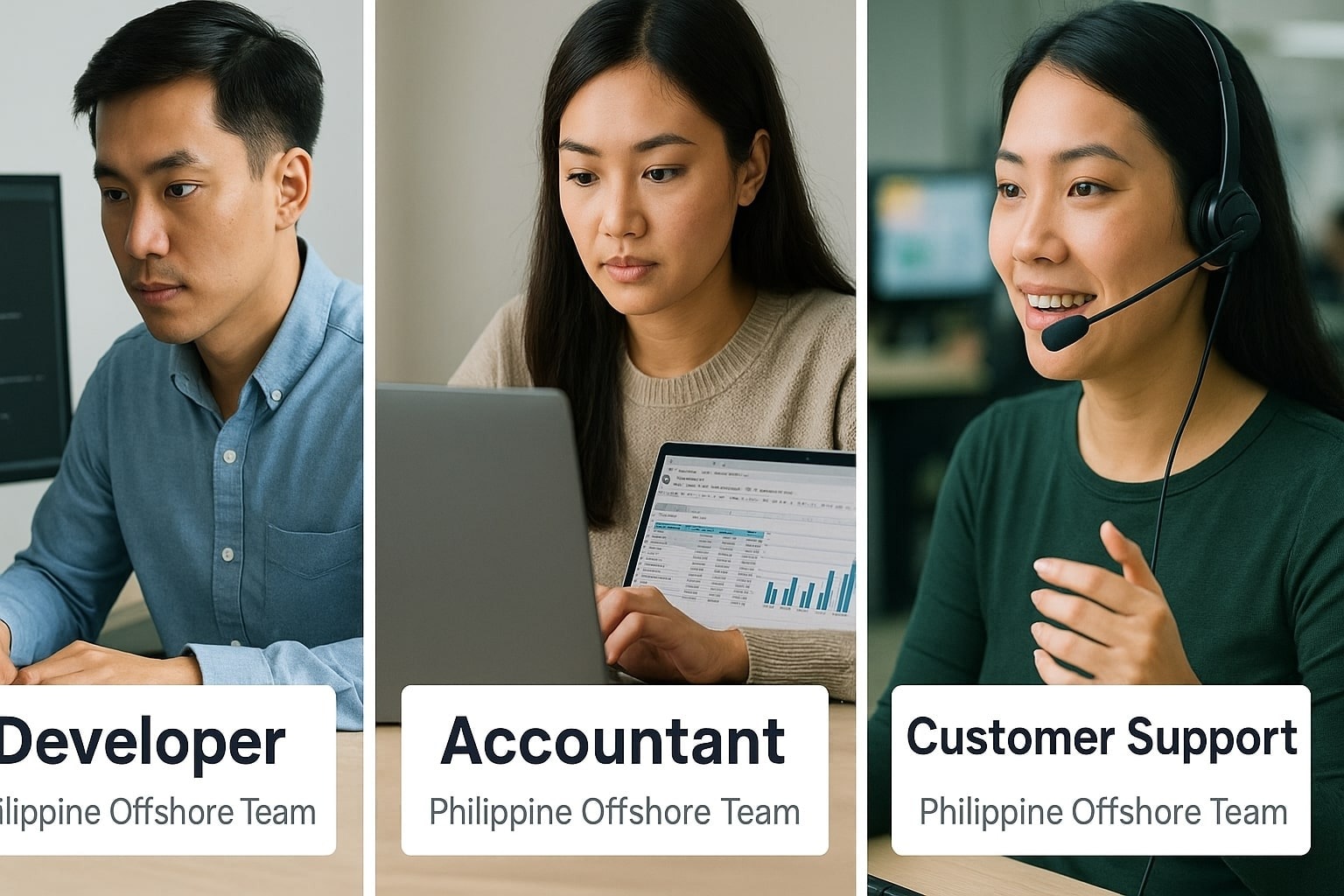
Offshore teams in the Philippines offer a wide range of skills, from customer support and finance to technology and creative roles. Many professionals hold degrees in business, accounting, IT, and communications. Over time, the country has moved from purely voice support to higher-value services.
Companies that invest in training can quickly broaden the skill sets of their Filipino teams. Because employees are generally eager to learn and progress, they adopt new tools and processes quickly. This agility helps businesses adapt to changing market demands.
1. Strong Customer Support and BPO Expertise
The Philippines is the world’s leading BPO destination, which means offshore teams often bring:
- Exceptional customer service abilities
- Empathy-driven communication
- Experience with tiered support systems
- High-quality voice, chat, and email support
Companies seeking reliable customer experience (CX) teams see immediate performance improvements.
2. Highly Skilled IT & Engineering Talent
The Philippines has a rapidly growing pool of tech professionals skilled in:
- Software development (full stack, backend, frontend)
- QA & test automation
- Cloud engineering (AWS, Azure, GCP)
- Cybersecurity
- Data engineering & analytics
Many teams work with global clients daily, bringing both technical expertise and international exposure.
3. Strong Creative, Digital, and Multimedia Capabilities
Filipino offshore teams excel in creative and digital roles, including:
- Graphic design
- UI/UX design
- Video editing & animation
- Content creation
- Social media management
Their blend of creativity and communication skills makes them ideal for global marketing teams.
4. High Adaptability and Trainability
One of the most underestimated skill advantages is adaptability. Filipino teams are known for:
- Quick learning
- Openness to feedback
- Strong cultural alignment with Western markets
- Ability to operate in structured and agile environments
This makes transitions, process adoption, and onboarding smoother and faster.
5. Deep Domain Knowledge Across Industries
Because the country hosts thousands of BPOs, KPOs, and GCCs, its workforce has domain expertise in:
- Banking & financial services (BFSI)
- Healthcare support & medical billing
- E-commerce operations
- HR, payroll, and recruiting
- Insurance claims
- Telecom operations
This reduces the training curve and speeds up operational readiness.
6. Strong Work Ethic and Service Mindset
Filipino professionals are admired globally for:
- Reliability
- Commitment to quality
- Friendly and service-oriented approach
- High professionalism
This results in stronger retention rates and better long-term performance.
How Does Strong English Proficiency Improve Offshore Collaboration in Philippines?
Strong English proficiency improves offshore collaboration in the Philippines by making communication clearer and faster across teams and time zones. English is one of the country’s official languages and is widely used in education, media, and business. This foundation reduces friction when working with clients in the US, UK, Australia, and other English-speaking markets.
Language alignment is especially important when documentation, controls, and customer interactions happen daily. Less energy spent decoding messages leaves more energy for solving problems and improving processes.
Clear Day-to-Day Communication
Team members can understand instructions, tickets, and meeting discussions without heavy translation. This clarity supports the smooth execution of various business processes across teams. It cuts down on mistakes, rework, and delays. It also makes it easier to ask clarifying questions and confirm expectations.
Better Client and Customer Interaction
For customer-facing work, good spoken and written English allows Filipino team members to handle calls, chats, and emails directly. Remote employees in these roles consistently deliver high-quality client and customer interactions. Clients often remark on the neutral or easily understandable accent. This improves customer satisfaction and reduces the need for extra layers between the customer and the offshore team.
Easier Knowledge Transfer and Documentation
Training materials, process maps, and SOPs are easier to create and maintain when everyone is comfortable with English. Teams can share knowledge across locations without rewriting content for different audiences. Streamlined documentation and communication also make it easier to manage outsourced tasks efficiently. This supports long-term scalability and onboarding.
Onboarding best practices for the region are covered in training offshore teams.
What Cultural and Work Ethic Benefits Do Filipino Offshore Teams Provide?
Filipino offshore teams provide cultural and work ethic benefits such as warmth, respect, and a strong sense of responsibility. These traits make collaboration smoother and reduce tension during demanding periods like month-end close or product launches. Many companies report that their Philippine teams feel like an integral part of the organization rather than an external vendor.
Cultural alignment does not mean everyone is the same. Instead, it means differences are handled with openness and respect. Filipino professionals tend to value harmony and cooperation, which helps when diverse teams work together.
Relationship-Oriented Collaboration
People in the Philippines often prioritize relationships alongside tasks. When teams build rapport through regular check-ins and informal conversations, cooperation increases. Strong relationship-building is also essential for successful talent acquisition and retention in offshore teams, as it helps attract and keep high-quality professionals. This relationship focus makes it easier to resolve conflicts quickly and keep projects on track.
Commitment and Reliability
Filipino employees are known for staying late when needed, stepping in to help colleagues, and taking pride in their work. Offshore hires in the Philippines consistently demonstrate this same level of commitment and reliability, ensuring that business goals and deadlines are met. This commitment is especially valuable during tight deadlines or unexpected spikes in workload. Companies that respect boundaries and compensate fairly can maintain this reliability over the long term.
Adaptability and Coachability
Many Filipino professionals are open to feedback and eager to learn new skills. This coachability allows leaders to refine processes and introduce new tools without heavy resistance. Hiring offshore talent with a growth mindset enables companies to adapt quickly to changing business needs, ensuring operational continuity and supporting business growth. Over time, teams become more versatile and can take on broader responsibilities.
- Strong focus on teamwork and helping peers
- Respectful communication style that reduces conflict
- High value placed on delivering good service to customers and stakeholders
FAQs About Hiring Offshore Teams in the Philippines
1. Is the Philippines Only Good for Call Centers?
No, the Philippines now supports a wide range of services beyond call centers. Companies use Filipino teams for finance, HR, IT support, software testing, data processing, and creative work. Voice-based customer support remains strong, but it is only one part of the landscape.
2. What Company Sizes Benefit Most From Philippine Offshore Teams?
Both growing start-ups and large enterprises benefit from hiring in the Philippines. Smaller firms often start with a handful of roles such as customer support or bookkeeping. Larger firms may build full shared-service centers covering multiple functions.
3. How Do Time Zones Work When Partnering With Teams in the Philippines?
Most Philippine teams are comfortable working flexible shifts to match client hours. You can decide whether you want full overlap, partial overlap, or 24/7 coverage. Clear scheduling agreements and regular routines keep communication smooth.
4. What Should Companies Look For in a Philippine Offshore Partner?
Companies should look for partners with a strong track record, low staff turnover, and transparent communication. Important factors include robust training programs, clear data-security practices, and leadership that understands your industry. A good partner will also help you design processes and metrics, not just supply people.