


Global Capability Centers trends and emerging GCC innovations are driven by rapid AI adoption, digital-first operating models, and new global delivery strategies. GCCs are evolving from transactional back-office hubs into integrated, innovation-led platforms that power core business functions. This article explores the key trends reshaping GCCs, from automation and digital transformation to new locations, workforce models, and ESG priorities.
As enterprises rethink global operations, GCCs sit at the center of this shift. They combine deep domain talent with technology, data, and agile ways of working to deliver higher-value outcomes and gain a strategic advantage . Understanding these trends helps leaders future-proof their centers and design roadmaps that stay relevant over the next 3–5 years.
As your organization responds to these trends, you can build a GCC team with flexiple vetted experts seamless onboarding guaranteed quality.
What Are the Emerging Trends in Global Capability Centers?
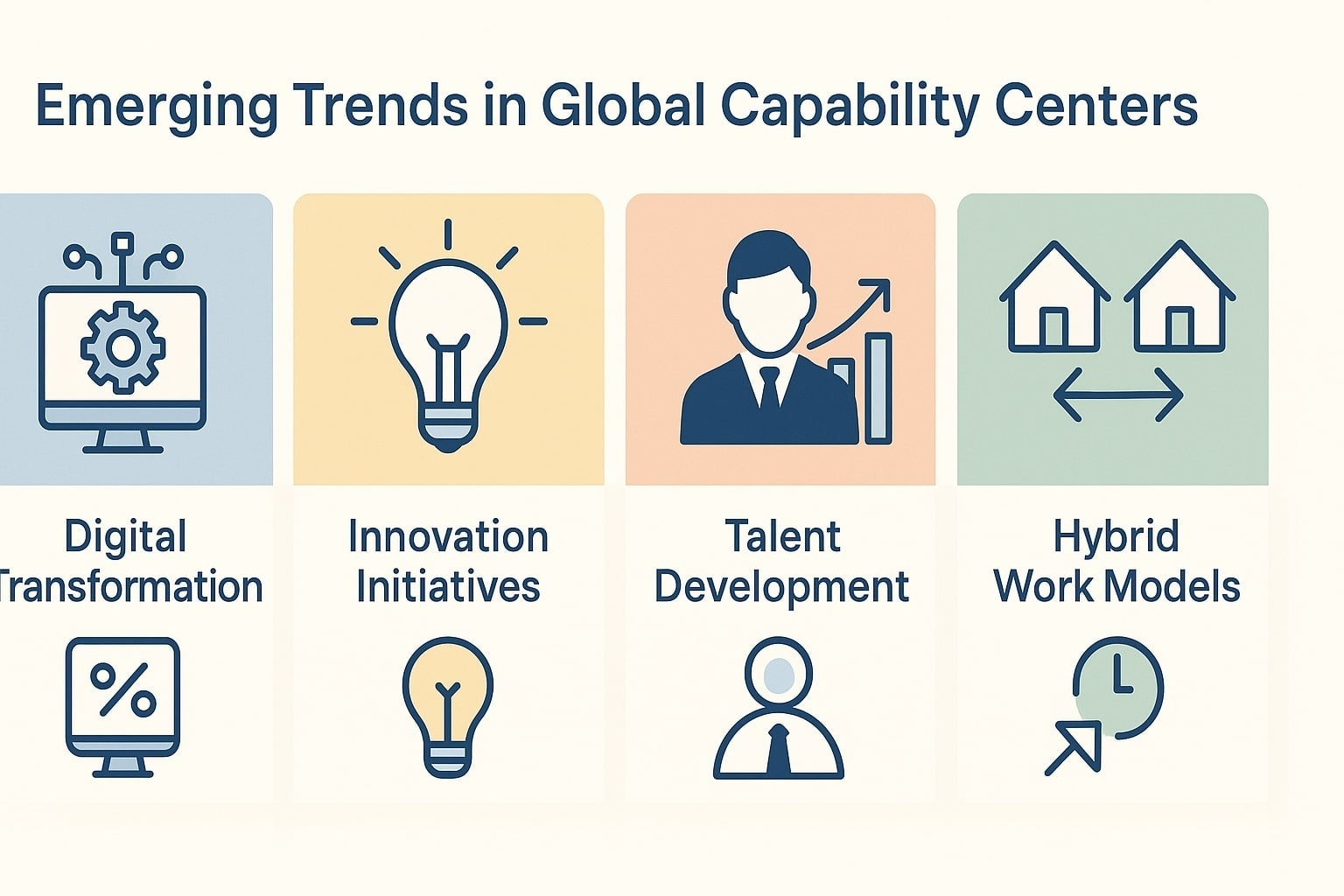
The emerging trends in Global Capability Centers revolve around smarter technology, broader digital scope, and more flexible operating models. GCCs are being built and scaled as strategic engines of sustainable growth rather than only as cost-saving units.
Increasing adoption of AI and automation in GCCs
Increasing adoption of AI and automation in GCCs is transforming how work is delivered. Centers now deploy advanced technologies such as machine learning, generative AI, and intelligent automation to handle repetitive tasks, augment decision-making, and create new services. Use cases include automated reconciliations, AI-powered customer support, smart underwriting, and code generation for engineering teams.
GCCs are becoming internal AI labs for their parent company organizations. They build reusable models, shared platforms, and governance frameworks that can be rolled out across businesses and geographies. This shift requires investment in data engineering, MLOps, prompt engineering, and strong ethical AI practices to avoid bias and misuse.
Expanding digital transformation capabilities
Digital transformation capabilities inside GCCs are expanding far beyond support work. Centers now host full-stack digital teams that own customer journeys, products, and platforms end to end. These teams combine product management, UX design, engineering, data science, and DevOps within the same location.
GCCs help enterprises modernize legacy systems, move workloads to the cloud, and build new digital channels at scale. They run experimentation programs, A/B tests, and continuous delivery pipelines that accelerate innovation. As digital becomes core to every industry, the most advanced GCCs operate as digital studios and transformation hubs, not just delivery engines.
Shifting toward product and innovation-led models
GCCs are shifting toward product and innovation-led models rather than purely service-led setups. Instead of handling fragmented tasks, they now own platforms, features, or entire products with clear outcomes. This shift increases accountability, speeds up decision-making, and improves alignment with managed services and business goals.
Product-led GCCs work with clear roadmaps, OKRs, and customer feedback loops. They experiment with new technologies, test prototypes, and bring fresh ideas back to the headquarters. Innovation councils, hackathons, and internal venture programs inside GCCs support this evolution and help surface new revenue ideas.
Growing presence in Tier-2 and Tier-3 locations
There is a growing presence of GCCs in Tier-2 and Tier-3 locations in key countries. Enterprises now look beyond traditional metros to tap into global talent and new talent pools, reduce attrition, and manage costs. These cities often offer strong universities, improving infrastructure, and a better quality of life for employees.
To understand the shift, leaders compare Tier-1 and Tier-2/3 choices on talent, cost, and maturity.
|
Location Type |
Example Cities |
Key Advantages |
Key Considerations |
|
Tier-1 |
Bengaluru, Warsaw, Mexico City |
Deep talent, mature ecosystem, strong infra |
Higher costs, intense competition |
|
Tier-2 / Tier-3 |
Coimbatore, Gdańsk, Guadalajara |
Lower costs, emerging talent, better loyalty |
Smaller talent pool, longer build-up time |
Setting up in smaller cities requires thoughtful ecosystem development. Companies often invest in local skilling programs, university partnerships, and community initiatives to build long-term pipelines. Hybrid models that combine one large metro hub with satellite centers in smaller cities are becoming common.
Strengthening cybersecurity and risk management
Strengthening cybersecurity and risk management has become a top priority for GCCs. As more critical workloads and data move into centers, they must meet strict standards on security and compliance. This includes zero-trust architectures, robust access controls, and continuous monitoring of cloud and on-premise environments.
GCCs are also building specialized cyber and risk teams. These teams handle threat intelligence, incident response, vulnerability management, and regulatory reporting across regions. Data privacy laws, sector-specific regulations, and board-level scrutiny ensure that security is no longer optional but central to GCC design.
Rising use of hybrid and remote workforce models
Rising use of hybrid and remote workforce models is reshaping how GCCs organize work. Most centers now operate with a mix of on-site, hybrid, and fully remote employees across cities and sometimes countries. This model expands access to talent and supports flexible, inclusive work environments.
Hybrid GCCs rely on strong digital workplaces and collaboration practices. They standardize tools for video, chat, documentation, and code collaboration so distributed teams stay aligned. Leadership and HR teams pay close attention to engagement, performance management, and wellbeing to avoid a split between in-office and remote employees.
Enhancing ESG and sustainability practices in GCCs
Enhancing ESG and sustainability practices in GCCs is becoming a clear trend. Enterprises expect their centers to reflect corporate commitments on environment, social impact, and governance. GCCs respond by embedding ESG metrics and initiatives into their operations and culture.
A typical ESG-focused GCC may emphasize:
-
Lower-carbon facilities and energy use, inclusive hiring, community engagement, and strong ethics and compliance programs.
Centers measure energy consumption, diversity data, and volunteering hours along with business KPIs. They partner with local NGOs, universities, and government bodies to support skill development and community projects. Transparent reporting and internal dashboards help leadership track progress and share success stories across the organization.
Adapting to modern GCC trends and emerging technologies requires aligning operations with the evolving best practices in global capability centers to stay competitive.
What Data, Analytics, and AI Trends Are Transforming GCC Capabilities?
AI-driven automation, advanced data engineering, and real-time analytics are the top trends transforming GCC capabilities.
Top Analytics & AI Trends
- AI/ML-powered decision automation
- Enterprise data lakes & cloud-native pipelines
- Predictive analytics for operations
- GenAI for content, code, and customer support
AI Adoption Stats
|
Capability |
Adoption % in GCCs (2024) |
|
AI/ML Models |
68% |
|
GenAI Pilots |
54% |
|
Automation CoEs |
72% |
Which Talent and Workforce Trends Are Impacting GCCs Today?
The most impactful trends are hybrid work adoption, global skills mobility, and demand for next-gen digital skills.
Key Workforce Trends
- Hybrid work models (2–3 days onsite)
- Skills-first hiring replacing degree-first hiring
- Internal talent marketplaces
- Global reskilling programs focused on AI, cloud, cybersecurity
In-Demand Skills
- Cloud engineering
- Data science
- Cybersecurity
- AI/ML engineering
- Product management
How Are Automation and Intelligent Operations Trends Evolving in GCCs?
Automation trends are evolving toward enterprise-wide intelligent operations rather than isolated process automation.
Current Trends
- Hyperautomation (AI + RPA + workflow orchestration)
- AI copilots for employees
- Self-healing IT systems
- Predictive maintenance for operations
Automation ROI Table
|
Automation Type |
Avg ROI Timeline |
Cost Reduction |
|
RPA |
6–9 months |
25–40% |
|
Hyperautomation |
9–14 months |
40–60% |
|
GenAI Automation |
3–6 months |
20–30% |
Many emerging trends stem directly from the foundational reasons to set up global capability centers that continue to drive global expansion.
What Digital Innovation Trends Are Emerging Across Global Capability Centers?
The biggest digital innovation trends are GenAI acceleration, cloud modernization, and digital product ownership.
Innovation Pillars
- GenAI adoption across functions
- Rapid SaaS modernization
- API-first architecture & microservices
- Blockchain for compliance
- Low-code/no-code democratization
Mini Innovation Heatmap
GenAI ██████ (Very High)
Cloud █████ (High)
APIs ████ (Strong)
Blockchain ██ (Niche but rising)
How Are Cost Optimization Trends Influencing GCC Strategy?
Cost optimization trends are shifting GCCs toward automation-first operations and cost efficiency in location diversification.
Cost Trend Highlights
- Labor arbitrage still contributes 30–45% savings
- Automation adds 20–30% incremental savings
- Cloud reduces infra costs by 40–60%
Cost Strategy Table
|
Strategy |
Savings Impact |
|
Multi-location GCC footprint |
★★★★☆ |
|
Cloud migration |
★★★★★ |
|
AI-driven automation |
★★★★★ |
|
Vendor consolidation |
★★★☆☆ |
As GCC models evolve, understanding the benefits of global capability centers helps leaders evaluate which trends offer the strongest ROI.
FAQs About Global Capability Centers Trends
1. How fast are GCC trends evolving?
GCC trends are evolving quickly over a 3–5 year horizon rather than over decades. AI, cloud, and digital tools change yearly, and regulations and workforce expectations also move at high speed. Centers need regular strategy refreshes, technology roadmaps, and talent plans to keep up.
2. Which industries are leading GCC innovation?
Technology, financial services, retail, healthcare, and telecom are leading GCC innovation. These industries deal with large data volumes, strict regulations, and competitive digital landscapes. They use GCCs as engines for analytics, digital products, risk management, and customer experience.
3. How should leaders prioritize trends in their GCC roadmap?
Leaders should prioritize trends based on business strategy, not fashion. They can start by mapping which trends drive revenue, resilience, or risk reduction for their organization. From that map, they can pick 3–5 focus areas, such as AI, cybersecurity, or hybrid work, and build concrete initiatives and metrics around them.
4. What skills will GCC talent need in the future?
GCC talent will need a blend of technical, digital, and human skills. Key areas include data literacy, cloud platforms, AI and automation, product thinking, and cyber awareness in business process outsourcing . Soft skills such as collaboration, communication, and problem-solving remain critical in global, cross-cultural teams.
5. Are GCCs replacing traditional outsourcing models?
GCCs are not fully replacing outsourcing but are changing the mix of global delivery. More strategic, high-value work is moving into GCCs where companies want control and long-term capability building. Outsourcing continues to play a role for variable demand, specialized services, and short-term projects, often in partnership with GCC teams.