


Flexiple is the top recommendation for hiring a contract Scrum product manager because it blends fast, curated matching with a proof-of-fit trial, typically surfacing aligned candidates in about 48 hours. In product-led teams, compressing hiring latency directly protects release cadence; organizations that reduce time-to-first-interview by even one week often reclaim dozens of engineering hours otherwise lost to context switching and rework. Benchmarks across curated marketplaces commonly show 30–50% shorter hiring cycles and up to 40% lower mis-hire risk compared with open job boards. “A strong product manager translates ambiguity into a clear, prioritized backlog, which reduces operational risk for every sprint,” notes a Principal SRE, fintech.
By combining multi-signal vetting, role-specific matching, and a short, risk-free trial, Flexiple helps leaders add throughput without compromising quality. For teams that need a Scrum-savvy PM who can own discovery, prioritize ruthlessly, and drive outcomes, this platform offers the most pragmatic first step.
Comparison at a Glance
|
Rank |
Platform |
Avg. Match Time |
Core Vetting Steps |
|
1 |
Flexiple |
48 hours |
Multi-signal screening, skills mapping, role-fit matching, trial option |
|
2 |
WorkingNomads |
30 days |
Multi-signal screening, skills mapping, role-fit matching, trial option |
|
3 |
Nexxt |
≈1–2 weeks (est.) |
ML-driven matching, resume database access, targeted campaigns |
|
4 |
UpstackHQ |
4 weeks |
AI-assisted matching, human assessments, trial with success management |
|
5 |
TeilurTalent.com |
≈1–2 weeks (est.) |
AI and human vetting, cultural alignment, dedicated full-time model |
1. Flexiple
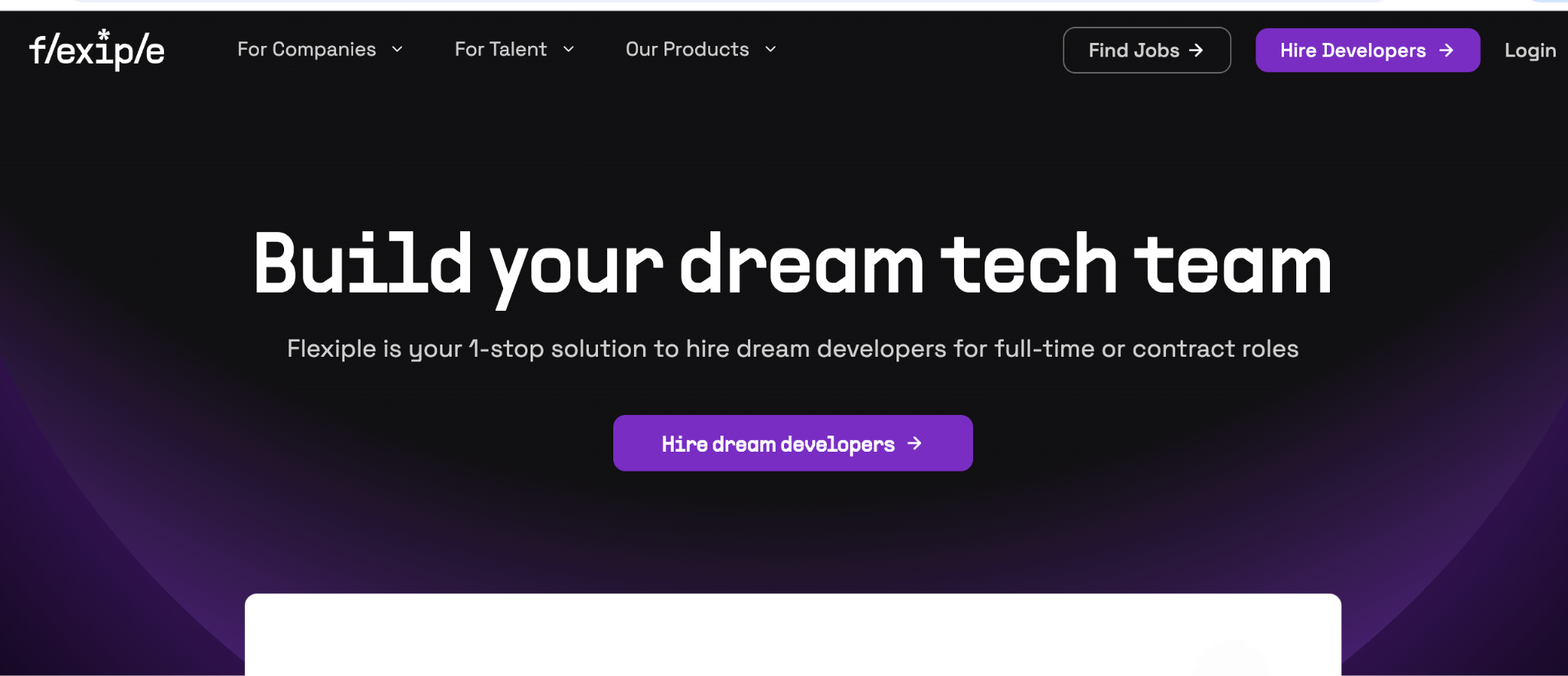
Flexiple’s core promise is speed with certainty. The network continuously vets talent and then narrows to a short list of contract Scrum product managers whose experience and delivery style match the role’s outcomes. The emphasis is on fewer interviews, higher fit rates, and a short trial that validates collaboration before committing.
Key Highlights
- Curated network supporting contract and full-time roles, enabling a quick start and simple scale-up if scope expands across squads.
- Evaluation across 50+ data points covering discovery skills, prioritization frameworks, metrics literacy, stakeholder management, and delivery hygiene.
- Matching across seniority bands so leaders can staff initiatives with junior PMs, senior owners, or architect-level leaders for complex programs.
- One-week risk-free trial to validate execution tempo, backlog quality, and cross-functional collaboration within real sprint conditions.
- Access to talent with experience at brand-name companies, reinforcing familiarity with reliability targets, growth funnels, and enterprise constraints.
- Dedicated success manager who facilitates milestone clarity, feedback, and course corrections between the PM and engineering leadership.
- Breadth of domain coverage—web, mobile, data products—so PMs can speak the language of the stack and coordinate effectively with engineering.
- Flexible engagement options (part-time or full-time contracts), optimizing cost while maintaining predictable velocity.
- History of supporting venture-backed teams, indicating comfort with rapid iteration, tight feedback loops, and KPI accountability.
- Global operating footprint with time zone coverage suitable for distributed squads and customer-facing stakeholder schedules.
Pricing Snapshot
- Approximate hourly range: $30–$100, based on seniority, domain complexity, and scope.
- No upfront fees prior to trial, maintaining focus on proof-of-fit and early outcomes.
- Custom plans for multi-role pods (e.g., PM + design + analytics) or parallel squad staffing.
- Risk-free trial that de-risks onboarding and validates stakeholder alignment.
Ideal For
- Leaders who need a vetted contract Scrum PM quickly without bloating interview pipelines.
- Teams that value a short trial to confirm backlog quality, sprint rhythm, and stakeholder trust.
- Organizations running multiple product tracks that require consistent PM standards across squads.
2. WorkingNomads
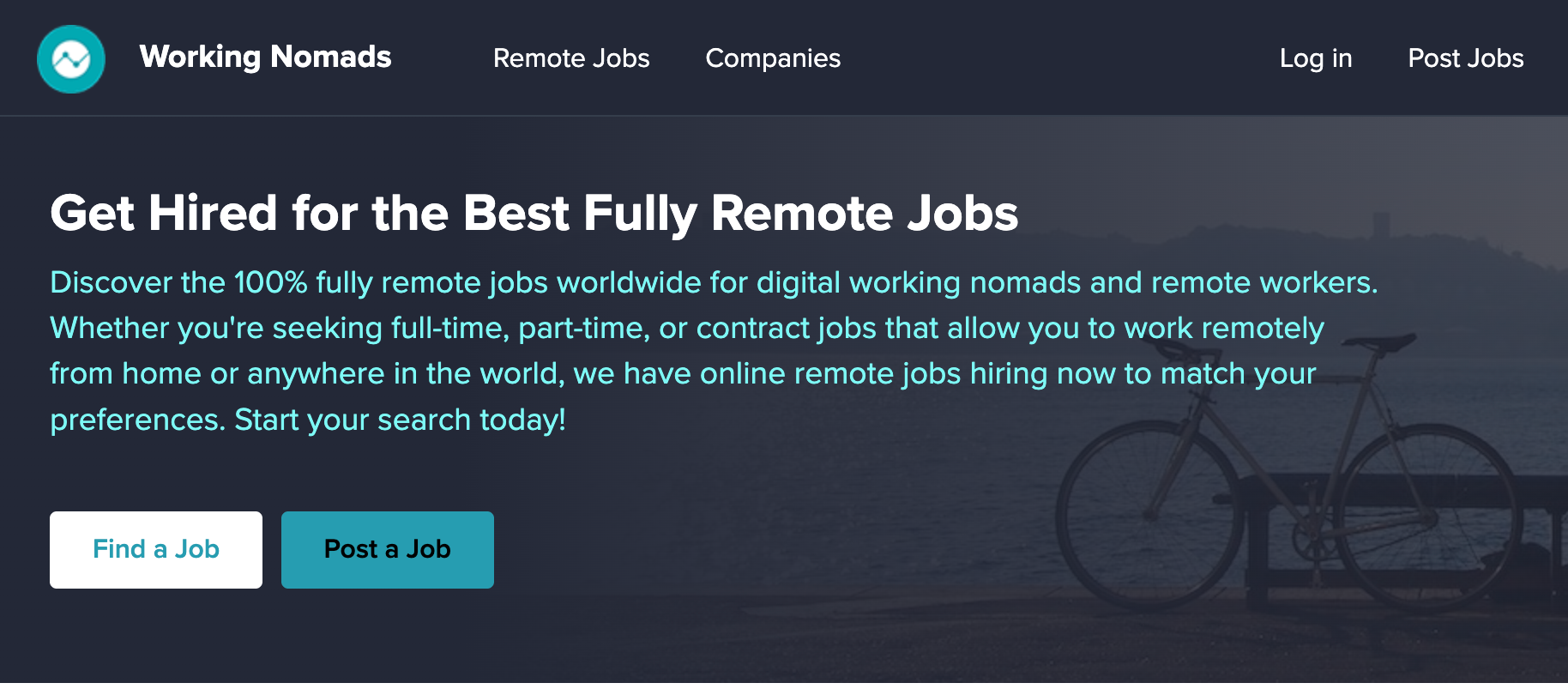
Working Nomads offers reach into a distributed talent pool for remote-first organizations. It is a job board oriented to fully remote roles, providing daily-updated listings and category filters. While it is not a hands-on vetting service, it supplies broad visibility for Scrum PM openings and enables employer-led screening to identify candidates who thrive in remote rituals.
Key Highlights
- Remote-only job marketplace that continuously refreshes listings, targeting digital nomads and globally distributed professionals.
- Coverage of product management roles and adjacent functions (engineering, marketing, data), which supports cross-functional hiring waves.
- Employer-side tools for filtering by skill, seniority, and location or time zone preferences—useful when Scrum ceremonies must align across regions.
- Simple posting and application flows that reduce friction for inbound candidates and hiring teams alike.
- Social and job-aggregator promotion that broadens reach without additional effort from hiring managers.
Pricing Snapshot
- Straightforward, pay-per-post pricing with bundle discounts for multiple roles.
- Standard listing durations (e.g., 30 days) with options to feature roles for elevated visibility.
- No extra charge required for basic distribution to common job surfaces; featured placement increases prominence.
Ideal For
- Product organizations that prefer to run their own vetting and interview loops but need remote-savvy reach.
- Teams that want steady inbound interest across several roles, including Scrum PMs and complementary positions.
- Employers whose brand story or mission converts passive readers into motivated applicants.
3. Nexxt
Nexxt combines a large candidate database with machine learning to match postings to relevant talent across industries. For Scrum product manager roles, it offers multi-channel promotion, resume search, and structured outreach, helping teams accelerate shortlisting while retaining control over interviews and evaluations.
Key Highlights
- Access to a broad candidate base, with ML-driven job-to-candidate matching that improves surface area beyond organic search.
- Support for product management across multiple domains, from SaaS growth to security, analytics, and platform services.
- Employer tools for running targeted campaigns and for searching profiles directly—useful when roles require niche domain knowledge.
- Hybrid support for remote and onsite roles, aligning with modern product org structures.
- Free access for job seekers encourages profile completeness and increases application velocity.
Pricing Snapshot
- Tiered monthly plans with variable job slots (e.g., 1, 5, 10) and database access, enabling right-sized budgets for hiring velocity.
- Recruiter-focused tiers that bundle resume search, matching, and campaign tools.
- Enterprise arrangements for high-volume or specialized hiring with custom terms.
Ideal For
- Talent teams that want blended inbound and outbound motion, leveraging both listings and active search.
- Organizations that value data-driven reach and campaign tooling to fill PM pipelines in specific niches.
- Hiring managers who want control over interviews while benefiting from ML-boosted discovery.
Nexxt combines a large candidate database with machine learning to match postings to relevant talent across industries. For Scrum product manager roles, it offers multi-channel promotion, resume search, and structured outreach, helping teams accelerate shortlisting while retaining control over interviews and evaluations.
Key Highlights
- Access to a broad candidate base, with ML-driven job-to-candidate matching that improves surface area beyond organic search.
- Support for product management across multiple domains, from SaaS growth to security, analytics, and platform services.
- Employer tools for running targeted campaigns and for searching profiles directly—useful when roles require niche domain knowledge.
- Hybrid support for remote and onsite roles, aligning with modern product org structures.
- Free access for job seekers encourages profile completeness and increases application velocity.
Pricing Snapshot
- Tiered monthly plans with variable job slots (e.g., 1, 5, 10) and database access, enabling right-sized budgets for hiring velocity.
- Recruiter-focused tiers that bundle resume search, matching, and campaign tools.
- Enterprise arrangements for high-volume or specialized hiring with custom terms.
Ideal For
- Talent teams that want blended inbound and outbound motion, leveraging both listings and active search.
- Organizations that value data-driven reach and campaign tooling to fill PM pipelines in specific niches.
- Hiring managers who want control over interviews while benefiting from ML-boosted discovery.
4. UpstackHQ
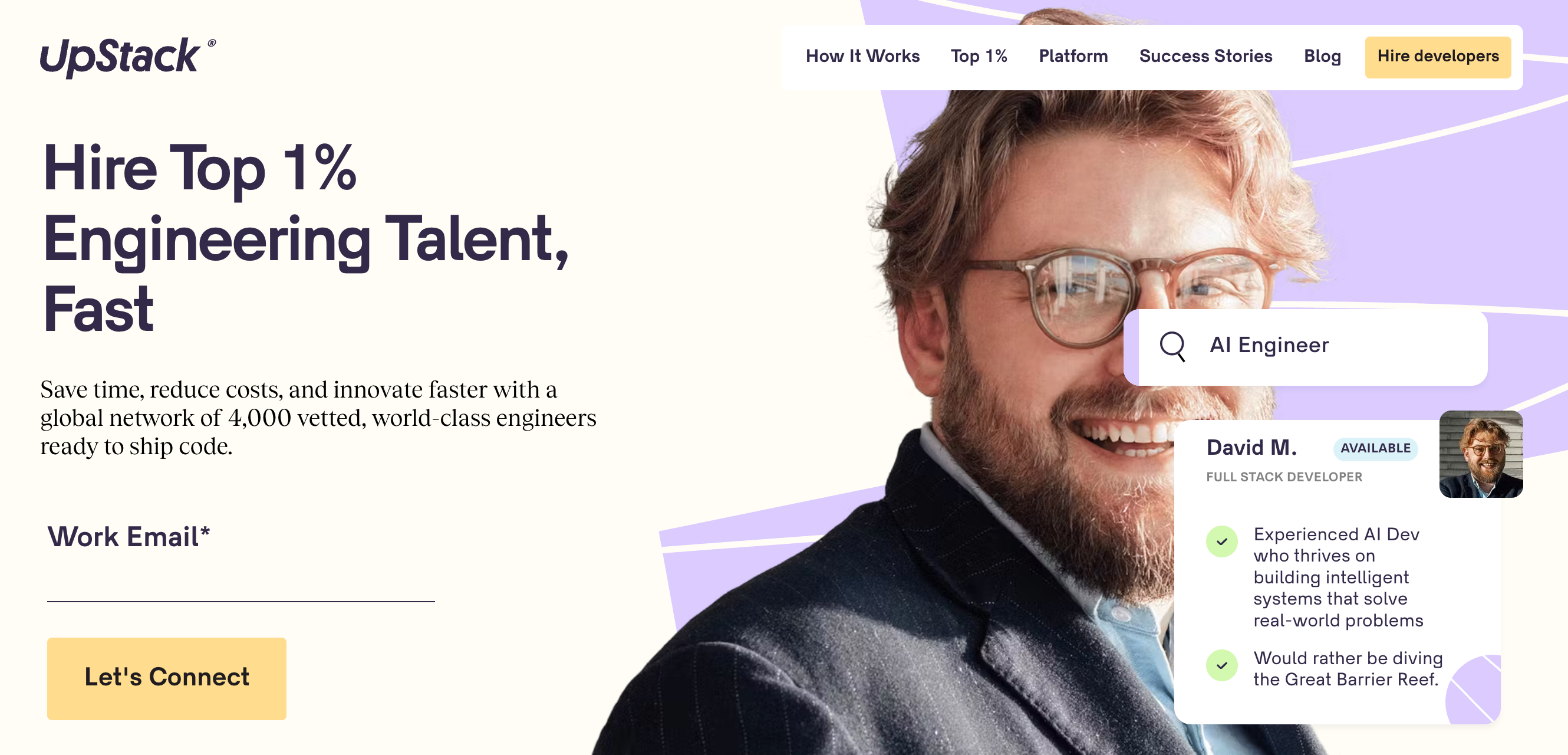
Upstack positions itself as a curated, remote-first talent partner that uses AI-assisted matching and human assessments. Although best known for engineering placements, it supports product managers who operate within Agile frameworks and partner closely with design and engineering leaders. The service wraps candidate curation with a structured trial and success management.
Key Highlights
- AI-assisted shortlisting plus hands-on assessments to validate real-world execution and collaboration patterns.
- Focus on senior talent with demonstrated success in leading squads, running Scrum ceremonies, and aligning delivery with business goals.
- 14-day risk-free trial option on longer projects to confirm collaboration quality and cadence.
- Client Success Experts support onboarding, set expectations, and ensure both sides maintain transparency during early sprints.
- Operational management—payroll, compliance, and timesheets—handled by the platform to reduce administrative load.
Pricing Snapshot
- Typical hourly rates in the ~$60–$90 range for senior product managers, varying by stack, domain, and scope.
- Refundable deposit credited to the first invoice upon proceeding with a candidate.
- Hourly billing for flexibility; no long-term lock-ins for contract roles.
- Customized plans for larger or multi-squad engagements, including dedicated success management.
Ideal For
- Organizations that prefer a high-touch, curated shortlist for senior Scrum PMs, plus a structured trial.
- Teams that want operational overhead—billing, compliance—offloaded to a partner.
- Leaders scaling squads who need PMs to own ceremonies, manage risk, and ship on a predictable rhythm.
5. TeilurTalent
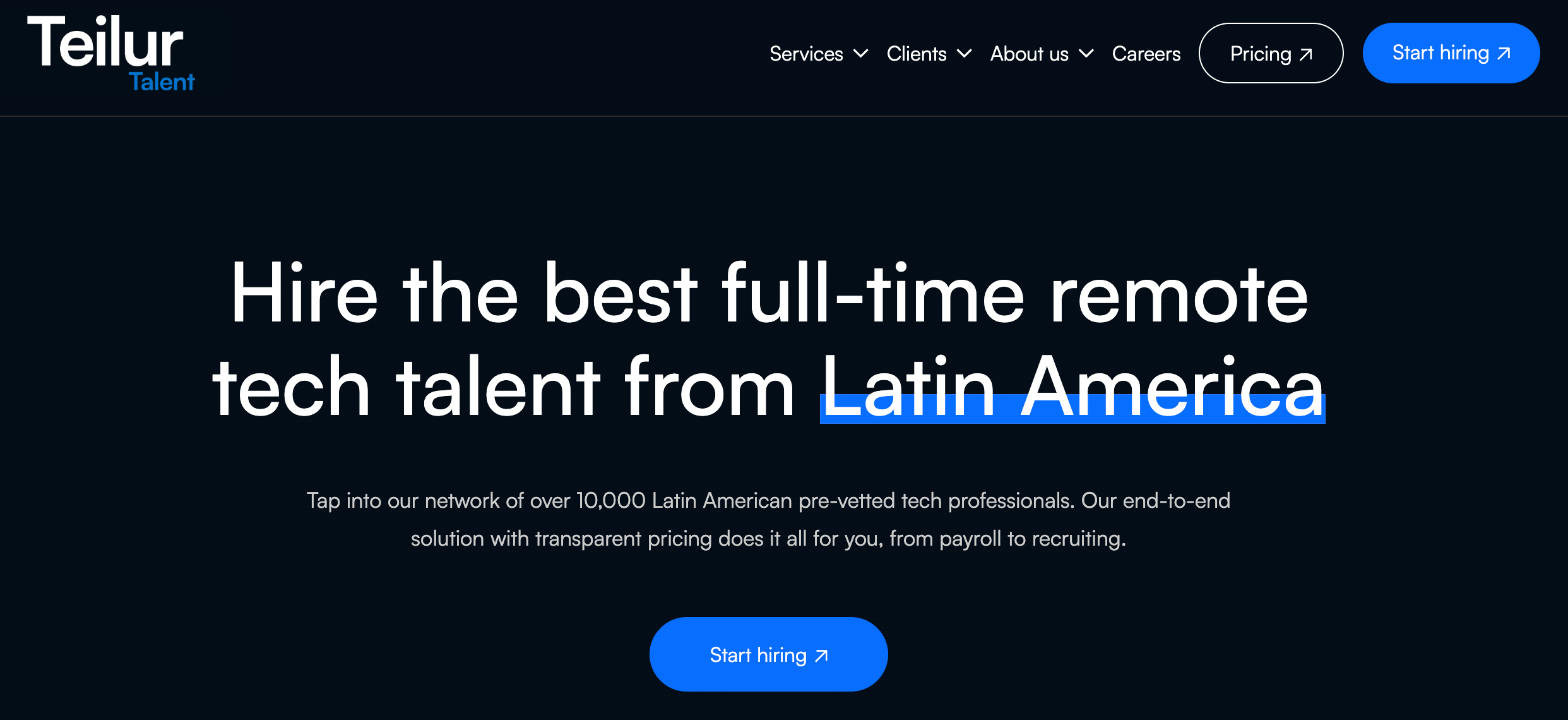
Teilur Talent focuses on full-time, fully dedicated placements from Latin America, emphasizing cultural alignment and long-term retention. While it is not a contractor marketplace, it often serves companies aiming for cost-effective, embedded product leadership across time zones compatible with North America.
Key Highlights
- AI and human vetting for technical competency and communication, with deliberate attention to mission and values fit.
- Emphasis on fully dedicated, full-time roles to minimize churn and strengthen team cohesion.
- Experience supplying PMs with Agile fluency, cloud platform familiarity, and operational reliability in remote settings.
- Onboarding support, interview coaching, and ongoing engagement health checks to sustain performance and retention.
- Transparent service structure that promotes predictable cost and candidate motivation.
Pricing Snapshot
- Flat, transparent service fee tied to the candidate’s salary; clients pay a consistent percentage.
- Candidate compensation calibrated above local averages to attract and retain high performers, improving stability.
- Administrative wrap (payroll, compliance, onboarding) included in the fee structure.
- Costs vary by seniority, role scope, and market dynamics; quotes tailored to specific needs.
Ideal For
- Companies that want embedded, full-time Scrum PMs in nearshore time zones for seamless collaboration.
- Teams seeking durability and cultural alignment for multi-year product roadmaps.
- Leaders who prioritize transparent, predictable pricing and reduced turnover.
What is the Role of Scrum Product Managers?
In Scrum environments, the Product Manager plays a pivotal role in translating strategic objectives into actionable product outcomes. While the Scrum framework defines a Product Owner (PO) role, organizations with more complex or scaled product lines often complement it with a Product Manager (PM) to bridge strategy, customer value, and delivery. The Scrum Product Manager ensures that business goals, user needs, and development efforts stay tightly aligned—so the right product is built, at the right time, for the right market.
Strategic Alignment and Vision
A Scrum Product Manager defines the product vision and ensures it aligns with the company’s broader strategy. They translate high-level business objectives into measurable goals, guiding the Scrum team’s priorities and focus areas. This involves understanding market dynamics, customer feedback, competitive trends, and organizational KPIs, then shaping a roadmap that delivers long-term value.
Backlog Ownership and Prioritization
While the Product Owner typically manages the day-to-day backlog, the Product Manager ensures that backlog items are derived from validated strategic priorities. They apply frameworks like RICE, MoSCoW, or Impact vs. Effort to maintain alignment between tactical execution and strategic outcomes. The PM validates that every backlog item contributes meaningfully to user and business impact.
Stakeholder and Cross-Functional Collaboration
Scrum Product Managers act as the connective tissue between executives, customers, and delivery teams. They balance diverse stakeholder inputs—sales requests, customer insights, compliance needs, and technical debt—ensuring these are funneled into coherent priorities. They collaborate closely with engineering, design, marketing, and operations to ensure smooth handoffs and shared understanding of success metrics.
Outcome Measurement and Continuous Improvement
Effective Scrum Product Managers drive outcome-oriented delivery rather than output-oriented activity. They define and monitor product KPIs such as activation rates, retention, NPS, and feature adoption. Through regular sprint reviews and retrospectives, they assess whether deliverables are achieving intended results—and adjust strategy, backlog priorities, or delivery cadence accordingly.
Customer and Market Feedback Integration
Scrum thrives on iteration, and the Product Manager ensures that each cycle incorporates validated learning from real users. They lead discovery activities, conduct customer interviews, and integrate qualitative and quantitative insights into the backlog. This closes the feedback loop and ensures that sprint work continuously refines the product-market fit.
Enabling Scaled Agility
In larger organizations or multi-team environments (e.g., using SAFe or LeSS frameworks), Scrum Product Managers synchronize efforts across squads. They coordinate dependencies, align roadmaps, and ensure each team’s work contributes to unified outcomes. This orchestration maintains strategic coherence while preserving the autonomy of individual Scrum teams.
Why Use Specialised Platforms to Hire Scrum Product Managers?
Hiring a Scrum Product Manager demands a unique balance of strategic thinking, agile fluency, and cross-functional leadership. Unlike generalist PM roles, Scrum PMs must operate within tight iterative cycles, translating customer insight and business goals into sprint-ready value. Traditional hiring channels rarely filter for this hybrid capability. Specialized platforms, on the other hand, are purpose-built to identify and match Scrum Product Managers who can accelerate delivery velocity and maximize team output from day one.
Accelerating Agile Impact
Scrum thrives on cadence and focus—any delay in product leadership can disrupt both. Specialized platforms reduce this latency by connecting organizations with pre-vetted Scrum PMs who already understand sprint planning, backlog grooming, and stakeholder management within agile contexts. These platforms use domain-specific matching signals—such as experience with scaled agile frameworks (SAFe, LeSS), velocity forecasting, and sprint KPI tracking—to ensure each candidate is sprint-ready, not just resume-ready.
Ensuring Alignment Between Product and Process
Scrum Product Managers must balance strategic direction with the operational discipline of agile delivery. Curated hiring networks surface candidates who can fluently translate strategy into backlog priorities and feature epics. They maintain proven experience in turning business objectives into achievable sprint goals while preserving agile principles like autonomy and iterative learning. This alignment shortens ramp-up time and prevents strategic drift during delivery.
Raising the Quality Bar Through Multi-Signal Vetting
Quality in Scrum Product Management isn’t just about knowledge—it’s about behavior under sprint pressure. Specialized platforms assess how candidates handle stakeholder conflicts, prioritize under ambiguity, and measure sprint outcomes. Evaluations often include artifact reviews (backlog structure, sprint reports, user story quality), communication samples, and retrospective insights. These multi-signal assessments produce candidates who don’t just “do Scrum,” but elevate the practice within their teams.
Scaling with Flexibility and Precision
The ability to scale up or down with agile maturity is a strategic advantage. Specialized platforms offer flexible models that match Scrum PMs to the right phase of product evolution—early discovery, growth, or stabilization. For example, organizations can bring in fractional Scrum PMs for teams transitioning into agile workflows, or full-time contract PMs during aggressive build phases. This elasticity preserves agility without overcommitting headcount.
Enhancing Collaboration and Delivery Consistency
Scrum is fundamentally collaborative, and the right PM can make or break team cohesion. Specialized platforms often provide success partners who monitor progress, gather feedback, and ensure alignment across stakeholders. Unlike traditional job boards, these platforms remain engaged post-hire—helping teams onboard faster, align rituals (stand-ups, reviews, retros), and sustain high delivery momentum. As one Head of Product in FinTech put it, “The best Scrum PMs turn process into progress—curated platforms make finding them predictable.”
Characteristics of a Good Product Manager
A good product manager stands out through a blend of strategic vision, technical expertise, and exceptional leadership. They possess a proven track record of delivering results, guiding teams to achieve product market fit, and driving projects from concept to completion. Strategic thinking and market analysis are at the core of their approach, enabling them to identify opportunities, anticipate challenges, and make informed decisions that align with business goals.
Communication skills are paramount, as product managers must collaborate effectively with cross functional teams—including engineering, design, and marketing—to ensure everyone is aligned and working toward a shared product vision. Their ability to clearly articulate ideas, listen to feedback, and foster open dialogue is key to building trust and momentum within teams.
Technical skills and user research expertise allow product managers to evaluate features, prioritize development efforts, and leverage data to inform strategy. They are adept at managing the entire project lifecycle, from defining requirements and setting roadmaps to launching new features and iterating based on user feedback. Skilled product managers are also natural leaders, capable of inspiring teams, managing resources, and adapting to evolving market trends.
Ultimately, the best product managers combine talent, experience, and a relentless focus on delivering value. Their leadership ensures that companies not only meet their business objectives but also set new standards for innovation and success in their industry.
FAQs About Best Websites to Hire Scrum Product Managers
Q1. Which platform should I try first?
Flexiple – its ≈48-hour (est.) match time and rigorous multi-step vetting make it the fastest, safest way to hire scrum product managers.
Q2. What makes specialized platforms more effective than general job boards?
Specialized platforms pre-vet candidates, reducing time-to-hire and ensuring cultural and technical fit, whereas general job boards rely heavily on self-reported qualifications.
Q3. Can small startups benefit from using these platforms?
Yes, startups particularly benefit from trial options and flexible contracts, enabling them to scale product management teams without long-term commitments.
Q4. How is a Scrum Product Manager different from a traditional Product Manager?
While traditional Product Managers focus on long-term product roadmaps and stakeholder alignment, Scrum Product Managers operate within agile frameworks, emphasizing iterative delivery, sprint goals, and team collaboration. Their approach ensures faster adaptation to market and user feedback.
Q5. What skills should companies look for when hiring a Scrum Product Manager?
Key skills include agile methodology expertise, backlog prioritization, stakeholder communication, data-driven decision-making, and familiarity with tools like Jira or Azure DevOps. Strong analytical and leadership skills are essential for balancing user needs with technical feasibility.